

Demand Submission
Please leave us a message and we will contact you within 24 hours
NEWS CENTER
A variety of production processes, research and development, production, sales integration
NEWS CENTER
A variety of production processes, research and development, production, sales integration
High Thermal Conductivity Silicone Tube: Stable Heat Transfer for Modern Equipment
Time: 2025-12-11 08:22:39
Author: Dongguan Yutian Silicone Rubber Technology Co., Lt
Click:
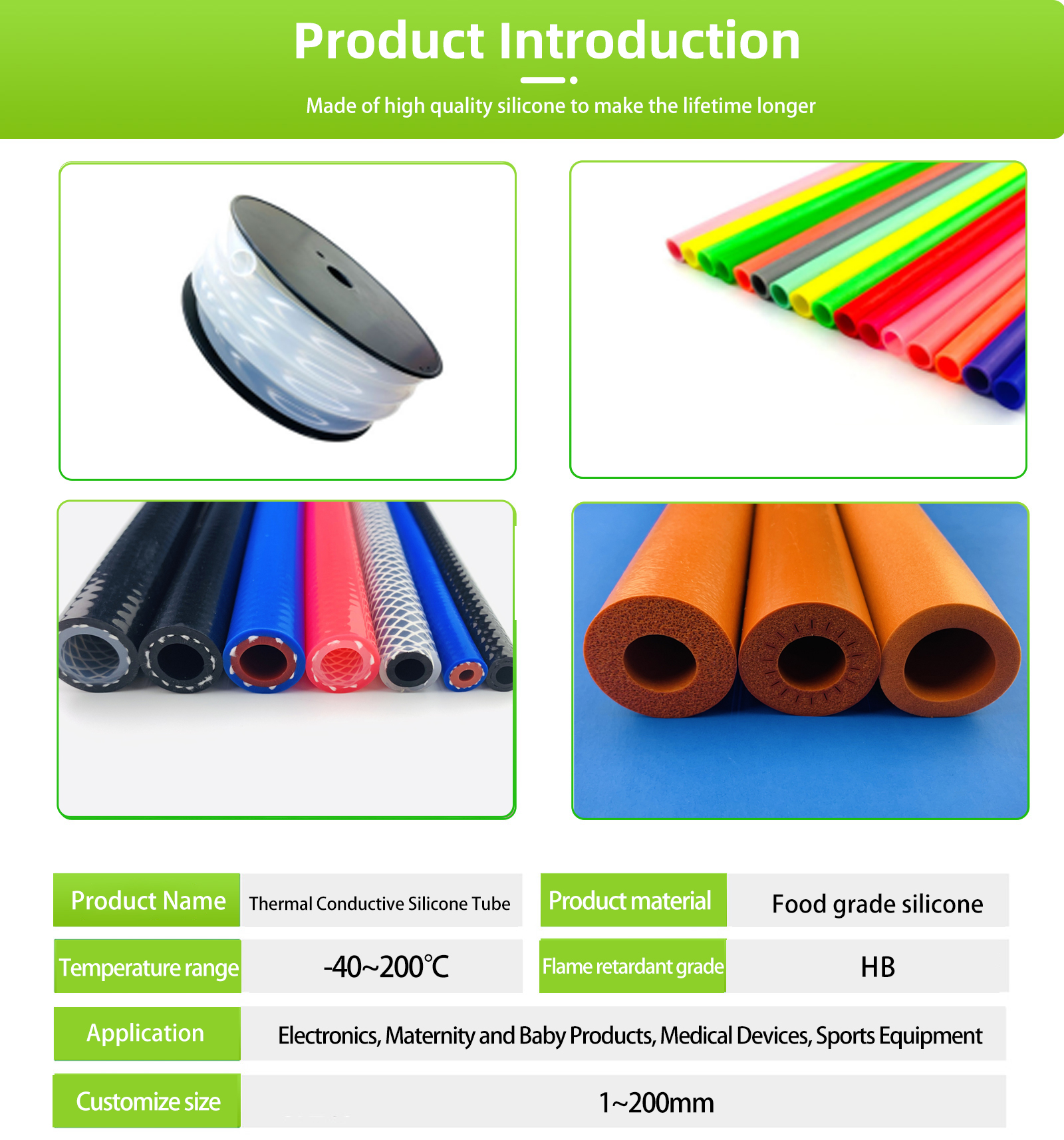
High thermal conductivity silicone tubes provide efficient heat transfer and long-term stability for demanding equipment. Using aluminum oxide–enhanced silicone materials, these tubes achieve up to 1.2 W/m·K conductivity while maintaining flexibility, temperature resistance, and mechanical durability. They serve as a reliable cooling and protection solution across multiple industries.
Thermal management has become a critical design factor in modern electronics, machinery, LED systems, and compact power devices. As components become smaller but operate at higher temperatures, material engineers increasingly rely on stable and flexible solutions for heat transfer. A high thermal conductivity silicone tube addresses this challenge by combining elastomer flexibility with enhanced heat-dissipation capability, resulting in a balanced and reliable cooling component.
A thermal conductive silicone tube is engineered using specialized silicone raw materials filled with heat-conductive additives. At our company, the material incorporates aluminum oxide (Al₂O₃), enabling thermal conductivity up to 1.2 W/m·K while maintaining the mechanical resilience typical of high-quality silicone elastomers.
Enhanced Heat Transfer Through Aluminum Oxide Fillers
The defining feature of this tubing is its upgraded thermal pathway. Aluminum oxide particles are dispersed uniformly throughout the silicone matrix, forming micro-channels that accelerate heat conduction. Unlike conventional silicone tubing, which has relatively low thermal transfer capability, the enhanced formulation allows heat to move quickly from the internal surface to the external environment.
This characteristic is especially important in systems where temperature stability directly influences performance—such as LED light engines, small motors, battery modules, and high-density semiconductor components. The tubing helps minimize heat buildup, prolong operational life, and maintain consistent performance under extended duty cycles.
Reliable Temperature Resistance and Stability
A high thermal conductivity silicone tube must withstand varying environmental conditions while preserving its heat transfer characteristics. The material’s broad working range from –40°C to 200°C allows it to function in both cold and high-temperature environments without hardening, cracking, or deforming.
This stability ensures the tube can be used around heat-generating components, within confined spaces, or as a protective sleeve where thermal changes occur frequently. Its resistance to oxidation, chemical exposure, and general aging further reinforces long-term reliability.
Flexibility Without Compromising Performance
Despite the added aluminum oxide, the tubing remains flexible and easy to integrate into complex equipment layouts. Its softness, elasticity, and controlled wall thickness allow it to bend around corners, fit into compact spaces, or be installed over irregular surfaces. This flexibility supports modern equipment designs that require both thermal management and mechanical adaptability.
The silicone base material also ensures electrical insulation—a critical advantage in devices where heat and electricity coexist in tight arrangements.
Consistent Heat Dissipation for High-Density Systems
As industries adopt more compact and energy-efficient systems, overheating becomes a bottleneck affecting overall performance. A thermal conductive silicone tube offers a passive yet effective solution that contributes to cooling without relying on fans or moving components.
Its ability to maintain stable heat transfer in confined spaces supports the engineering of:
- LED linear modules
- Power electronics
- Battery pack temperature regulation
- Small motors and electromagnetic components
- Communication devices and sensors
- Industrial automation modules
While its applications span multiple sectors, the product value fundamentally lies in the tubing’s improved thermal conductivity, mechanical strength, and environmental stability.
Customization for Different Engineering Requirements
Because equipment designs vary greatly, customization is often necessary. The silicone tube can be adapted in terms of inner diameter, outer diameter, wall thickness, color, softness, and conductivity level. This allows engineers to optimize the tube for airflow conditions, contact surfaces, or specific thermal transfer targets. Its ability to integrate seamlessly into different heat-dissipation systems makes it a dependable component for long-term use.
Conclusion
A high thermal conductivity silicone tube combines flexibility, stability, and enhanced heat transfer in one material solution. By using aluminum oxide fillers to achieve up to 1.2 W/m·K, the tubing provides reliable thermal control that helps protect sensitive components and maintain performance across diverse environments. As equipment continues to evolve toward higher output and smaller form factors, thermally conductive silicone tubing serves as a practical and robust choice for engineers seeking greater efficiency and durability.

点击右上角
分享给朋友吧







 Long by picture save/share
0
Popular
-
top Colored Silicone Tube: Production Process and How to Choose
-
top Enhancing the Lifespan of High-Temperature Silicone Tubes in...
-
top Introducing the Innovative Foam Silicone Tube: A High-Perfor...
-
The evolution and future of silicone material: a panoramic a...
-
Dongguan Yutian Silicone Rubber Technology Co., Ltd. Unveils...
-
Understanding the Causes of Bending and Clogging in Food-Gra...
-
Explore Cutting-Edge Silicone Solutions with Dongguan Yutian...
-
Dongguan Yutian Successfully Showcases Innovative Medical Si...
Latest Products








Message
Hi!If you are looking for custom-made silicone rubber products, feel free to ask me any questions.
High Thermal Conductivity Silicone Tube: Stable Heat Transfer for Modern Equipment
Author:Dongguan Yutian Silicone Rubber Technology Co., Lt
Click:
Time:2025-12-11 08:22:39
Thermal management has become a critical design factor in modern electronics, machinery, LED systems, and compact power devices. As components become smaller but operate at higher temperatures, material engineers increasingly rely on stable and flexible solutions for heat transfer. A high thermal conductivity silicone tube addresses this challenge by combining elastomer flexibility with enhanced heat-dissipation capability, resulting in a balanced and reliable cooling component.
A thermal conductive silicone tube is engineered using specialized silicone raw materials filled with heat-conductive additives. At our company, the material incorporates aluminum oxide (Al₂O₃), enabling thermal conductivity up to 1.2 W/m·K while maintaining the mechanical resilience typical of high-quality silicone elastomers.
Enhanced Heat Transfer Through Aluminum Oxide Fillers
The defining feature of this tubing is its upgraded thermal pathway. Aluminum oxide particles are dispersed uniformly throughout the silicone matrix, forming micro-channels that accelerate heat conduction. Unlike conventional silicone tubing, which has relatively low thermal transfer capability, the enhanced formulation allows heat to move quickly from the internal surface to the external environment.
This characteristic is especially important in systems where temperature stability directly influences performance—such as LED light engines, small motors, battery modules, and high-density semiconductor components. The tubing helps minimize heat buildup, prolong operational life, and maintain consistent performance under extended duty cycles.
Reliable Temperature Resistance and Stability
A high thermal conductivity silicone tube must withstand varying environmental conditions while preserving its heat transfer characteristics. The material’s broad working range from –40°C to 200°C allows it to function in both cold and high-temperature environments without hardening, cracking, or deforming.
This stability ensures the tube can be used around heat-generating components, within confined spaces, or as a protective sleeve where thermal changes occur frequently. Its resistance to oxidation, chemical exposure, and general aging further reinforces long-term reliability.
Flexibility Without Compromising Performance
Despite the added aluminum oxide, the tubing remains flexible and easy to integrate into complex equipment layouts. Its softness, elasticity, and controlled wall thickness allow it to bend around corners, fit into compact spaces, or be installed over irregular surfaces. This flexibility supports modern equipment designs that require both thermal management and mechanical adaptability.
The silicone base material also ensures electrical insulation—a critical advantage in devices where heat and electricity coexist in tight arrangements.
Consistent Heat Dissipation for High-Density Systems
As industries adopt more compact and energy-efficient systems, overheating becomes a bottleneck affecting overall performance. A thermal conductive silicone tube offers a passive yet effective solution that contributes to cooling without relying on fans or moving components.
Its ability to maintain stable heat transfer in confined spaces supports the engineering of:
- LED linear modules
- Power electronics
- Battery pack temperature regulation
- Small motors and electromagnetic components
- Communication devices and sensors
- Industrial automation modules
While its applications span multiple sectors, the product value fundamentally lies in the tubing’s improved thermal conductivity, mechanical strength, and environmental stability.
Customization for Different Engineering Requirements
Because equipment designs vary greatly, customization is often necessary. The silicone tube can be adapted in terms of inner diameter, outer diameter, wall thickness, color, softness, and conductivity level. This allows engineers to optimize the tube for airflow conditions, contact surfaces, or specific thermal transfer targets. Its ability to integrate seamlessly into different heat-dissipation systems makes it a dependable component for long-term use.
Conclusion
A high thermal conductivity silicone tube combines flexibility, stability, and enhanced heat transfer in one material solution. By using aluminum oxide fillers to achieve up to 1.2 W/m·K, the tubing provides reliable thermal control that helps protect sensitive components and maintain performance across diverse environments. As equipment continues to evolve toward higher output and smaller form factors, thermally conductive silicone tubing serves as a practical and robust choice for engineers seeking greater efficiency and durability.
点击右上角
分享给朋友吧
Long by picture save/share
0
Popular
Popular
Popular
Popular
-
top Colored Silicone Tube: Production Process and How to Choose
-
top Enhancing the Lifespan of High-Temperature Silicone Tubes in...
-
top Introducing the Innovative Foam Silicone Tube: A High-Perfor...
-
The evolution and future of silicone material: a panoramic a...
-
Dongguan Yutian Silicone Rubber Technology Co., Ltd. Unveils...
-
Understanding the Causes of Bending and Clogging in Food-Gra...
-
Explore Cutting-Edge Silicone Solutions with Dongguan Yutian...
-
Dongguan Yutian Successfully Showcases Innovative Medical Si...
Latest Products
Message
 Brown Di
 Brown Di