

Demand Submission
Please leave us a message and we will contact you within 24 hours
Conductive Silicone EMI Shielding Strips — 130dB Shielding, MIL-G-83528, Three Filler Materials
Yutian is a vertically integrated manufacturer with three factories spanning raw silicone, compounding, and precision extrusion. With 20+ years of expertise, 6,800m² facility, and 14+ extrusion lines, we deliver consistent quality from prototype to high-volume production.
Our conductive silicone EMI shielding strips are available in three filler materials — Ag/Al, Ag, and Ni/C — delivering shielding from 110dB to 130dB (blocking up to 99.9999% of EM emissions). Volume resistivity ranges from 0.002Ω·cm (pure Ag) to 0.05Ω·cm (Ni/C). Our standard coating process applies a conductive layer to the silicone surface — cost-effective for most applications. For ultra-low resistivity, our advanced compounding process mixes fillers directly into the silicone, achieving even lower volume resistivity and more stable shielding performance.
All products comply with MIL-G-83528 and ASTM D412, tested from -40°C to +160°C. We offer custom profiles — any cross-section — with low tooling costs and 3-5 day sampling. Value-added services include 3M adhesive backing and custom cutting — ready to install.
↓ Explore our EMI shielding series below — Ag/Al, Ag, and Ni/C solutions for 5G, automotive, medical, and military applications.

Ni-C silicone shielding strip
Yutian silicone's Ni-C Silicone Shielding Strip is designed for high-performance EMI shielding applications. Its unique combination of silver and aluminum particles ensures enhanced conductive properties, making it perfect for use in sensitive electronic devices, medical equipment, and communication systems. With outstanding durability and resistance to environmental factors, this shielding strip guarantees long-lasting protection against electromagnetic interference.
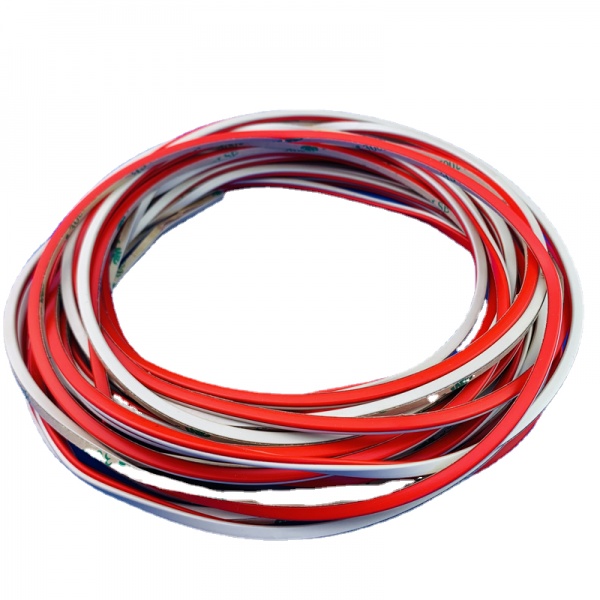
Ag-Al silicone shielding strip
Yutian silicone's Ag-Al Silicone Shielding Strip is designed for high-performance EMI shielding applications. Its unique combination of silver and aluminum particles ensures enhanced conductive properties, making it perfect for use in sensitive electronic devices, medical equipment, and communication systems. With outstanding durability and resistance to environmental factors, this shielding strip guarantees long-lasting protection against electromagnetic interference.

Silicone conductive strip
The silicone conductive strip is designed for applications requiring both sealing and electrical conductivity. It features outstanding performance in high-temperature and chemically challenging environments, making it ideal for electronics, automotive components, and communication devices. Its flexibility and durability ensure it performs efficiently in varied industrial applications, including conductive gaskets, seals, and touchpad components.
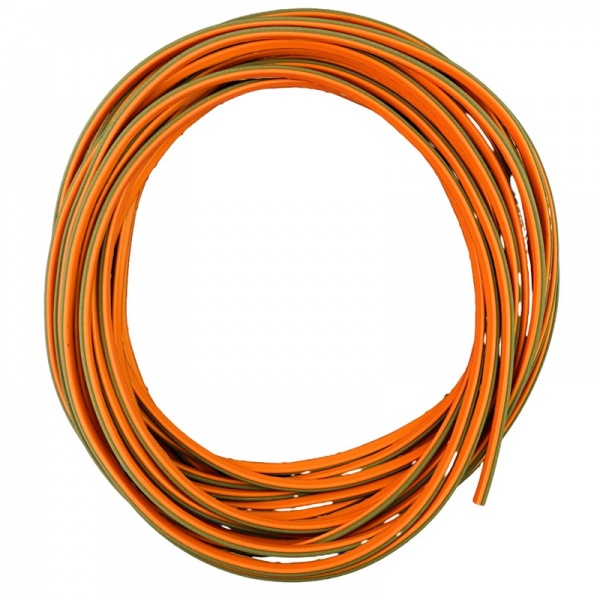
Silicone shielding strip
Shielding conductive silicone sealing strips are made from high-performance conductive materials, capable of providing efficient EMI electromagnetic shielding and sealing functions simultaneously. The products are suitable for applications that require electromagnetic compatibility and environmental sealing, such as electronic devices and communication equipment. Their strong flexibility and ease of installation make them an ideal choice for preventing electromagnetic interference and providing
Why Choose Yutian — Your EMI Shielding Partner
Vertically integrated · 20+ years expertise · 14+ lines · ISO 9001 · MIL-G-83528
Three integrated factories span the entire EMI shielding value chain — from raw silicone to finished conductive strips. Full in-house control, consistent quality, reliable delivery.
Guilin Yutian
Silicone raw material · source control
Dongguan Huahong
Compounding & conductive filler blending
Dongguan Yutian
Precision extrusion · EMI gasket finishing
Raw materialCompoundingExtrusionFinishing
6,800m²
Production Facility
14+
Extrusion Lines
90+
Production Team
10+ tons
Daily Capacity
20+
Years of Expertise
ISO
9001 · MIL-G-83528
Three Filler Materials · Precision-Matched
Ag/Al (130dB, highest mechanical strength) · Ag (lowest volume resistivity 0.002Ω·cm) · Ni/C (cost-effective 110dB). Precision-matched to your shielding requirements.
130dB Shielding · MIL-G-83528
Blocks up to 99.9999% of electromagnetic emissions. Tested per MIL-G-83528 and ASTM D412 — military-grade compliance for 5G, medical, and defense applications.
Coating + Compounding — Two Processes
Standard coating process applies conductive layer to silicone surface — cost-effective. Advanced compounding process mixes fillers directly into silicone, achieving even lower volume resistivity and more stable shielding performance.
Wide Temperature Range · Low Compression Set
Reliable from -40°C to +160°C with salt spray resistance. Low compression set (5%–9.3% at 100°C/168h) ensures consistent shielding after millions of compression cycles.
Shielding + Sealing — One Component
Combines EMI/RFI shielding and environmental sealing in one component. One installation step, one quality standard — replaces separate metal shields and rubber seals. Reduces assembly cost and complexity.
Fast Sampling · Reliable Delivery
3-5 day sampling · 5-7 day production after approval. Custom cross-sections — D/P/rectangular/bulb/U-shape/any profile. 3M adhesive backing, custom cutting, and complete kits available.
Three Filler Materials — Choose the Right Conductive Silicone for Your EMI Shielding Requirement
Ag/Al · Ag · Ni/C — Each engineered for specific shielding, conductivity, and cost requirements
The performance of a conductive silicone EMI shielding strip is determined primarily by its filler material. The conductive particles form a continuous electrical network when compressed, attenuating electromagnetic emissions while maintaining environmental sealing. We offer three filler systems — Ag/Al, Ag, and Ni/C — each delivering a distinct balance of shielding effectiveness, volume resistivity, mechanical strength, and cost.
| Property | Ag/Al | Ag | Ni/C |
|---|---|---|---|
| Volume Resistivity (Ω·cm) | 0.004 | 0.002 | 0.05 |
| Surface Resistance (Ω/inch) | <20 | <20 | <50 |
| Shielding Effectiveness (dB) | 130 | 130 | 110 |
| Shielding Rate | 99.9999% | 99.9999% | 99.999% |
| Tensile Strength (MPa) | 8.9 | 3.5 | 4.1 |
| Tear Strength (N/mm) | 39 | 16 | 15 |
| Elongation at Break (%) | 637 | 200 | 160 |
| Compression Set (100°C/168h) | 9.2% | 9.3% | 9.3% |
| Electrochemical Compatibility | ✅ Excellent (with Al housing) | ✅ Good | ✅ Good (with Al housing) |
| Salt Spray / Corrosion Resistance | ✅ Excellent | ✅ Good | ✅ Excellent |
| Flame Rating | UL94 HB | UL94 HB | UL94 HB |
| Cost | Medium | High | Low (1/4 of Ag series) |
| Test Standards | MIL-G-83528 · ASTM D412 | ||
Ag/Al — Maximum Shielding + Mechanical Strength
130dB shielding · 99.9999% attenuation · Highest tensile strength (8.9MPa) · Tear strength 39N/mm · Electrochemically compatible with aluminum housings · Ideal for military, aerospace, and medical imaging.
Ag — Lowest Volume Resistivity
Volume resistivity 0.002Ω·cm · 130dB shielding · Highest conductivity · 99.9999% attenuation · Ideal for telecom, 5G base stations, and high-frequency communication applications.
Ni/C — Best Cost-Performance
110dB shielding · 99.999% attenuation · Cost 1/4 of Ag series · Excellent salt spray and corrosion resistance · Electrochemically compatible with aluminum housings · Ideal for industrial cabinets and commercial applications.
Application Selection Guide
Military / Medical: Ag/Al · Telecom / 5G: Ag · Industrial Cabinets: Ni/C · Salt Spray / Outdoor: Ni/C or Ag/Al
Volume Resistivity: Lower values = higher conductivity. Ag: 0.002Ω·cm (lowest), Ag/Al: 0.004Ω·cm, Ni/C: 0.05Ω·cm.
Shielding Effectiveness: 130dB = 99.9999% attenuation · 110dB = 99.999% attenuation.
Tensile Strength: Ag/Al highest at 8.9MPa — ideal for demanding mechanical applications.
Electrochemical Compatibility: Ag/Al and Ni/C are compatible with aluminum housings — minimizing galvanic corrosion risk.
Test Standards: All products tested per MIL-G-83528 and ASTM D412. Full test reports available upon request.
Coating vs. Compounding — Two Manufacturing Technologies for Conductive Silicone EMI Shielding
Understanding the trade-offs between surface treatment and bulk material engineering
Conductive silicone EMI shielding strips can be manufactured through two fundamentally different approaches: coating and compounding.
Coating applies a conductive layer (Ag/Al, Ag, or Ni/C) onto the surface of a silicone substrate. The conductive particles form a thin film on the surface — typically up to 1mm thick — creating a conductive pathway while the core remains non-conductive silicone. This approach is cost-effective for standard applications where moderate shielding performance is acceptable. A coating is a surface treatment.
Compounding (also called mixing or bulk loading) blends conductive fillers directly into the silicone matrix before extrusion. The filler loading typically reaches ~40% conductive material to ~60% silicone by weight — creating a homogeneously conductive material throughout the entire cross-section. The conductive particles form a continuous electrical network through the bulk of the material, delivering superior, more stable shielding performance. A compound is a material property baked into the part itself.
Coating applies a conductive layer (Ag/Al, Ag, or Ni/C) onto the surface of a silicone substrate. The conductive particles form a thin film on the surface — typically up to 1mm thick — creating a conductive pathway while the core remains non-conductive silicone. This approach is cost-effective for standard applications where moderate shielding performance is acceptable. A coating is a surface treatment.
Compounding (also called mixing or bulk loading) blends conductive fillers directly into the silicone matrix before extrusion. The filler loading typically reaches ~40% conductive material to ~60% silicone by weight — creating a homogeneously conductive material throughout the entire cross-section. The conductive particles form a continuous electrical network through the bulk of the material, delivering superior, more stable shielding performance. A compound is a material property baked into the part itself.
| Comparison | Coating (Surface Treatment) | Compounding (Bulk Loading) |
|---|---|---|
| Principle | Conductive layer applied to silicone substrate surface | Conductive fillers blended into silicone matrix before extrusion |
| Conductive Layer Location | Surface only (surface conductive) | Throughout entire cross-section (bulk conductive) |
| Filler Loading | Conductive filler in coating layer only | ~40% filler + ~60% silicone |
| Max Coating / Conductive Thickness | ≤1mm | N/A (entire material is conductive) |
| Volume Resistivity | Higher (depends on coating quality and thickness) | Lower, more stable (uniform filler distribution) |
| Shielding Stability | May degrade with wear or coating delamination | Consistently stable — fillers uniformly distributed |
| Mechanical Properties | Substrate properties dominate (coating may crack) | Uniform performance throughout |
| Shielding Mechanism | Primarily reflection | Primarily absorption |
| Cost | Lower | Higher (more conductive material) |
| Best For | Standard industrial, cost-sensitive applications | Military, medical, 5G, high-end applications |
When to Choose Coating
✓ Standard industrial cabinets & commercial enclosures
✓ Cost-sensitive projects
✓ Moderate shielding requirements (up to 110dB)
✓ Non-critical EMI environments
✓ Applications with minimal mechanical wear
✓ Cost-sensitive projects
✓ Moderate shielding requirements (up to 110dB)
✓ Non-critical EMI environments
✓ Applications with minimal mechanical wear
When to Choose Compounding
✓ Military, aerospace & medical imaging (critical reliability)
✓ 5G telecom & high-frequency applications
✓ EV battery packs & automotive (vibration-resistant)
✓ Highest shielding requirements (130dB)
✓ Long-term reliability under compression & wear
✓ 5G telecom & high-frequency applications
✓ EV battery packs & automotive (vibration-resistant)
✓ Highest shielding requirements (130dB)
✓ Long-term reliability under compression & wear
Volume Resistivity Comparison (Typical Values):
Ag/Al: Coating ~0.008Ω·cm → Compounding ~0.004Ω·cm
Ag: Coating ~0.005Ω·cm → Compounding ~0.002Ω·cm
Ni/C: Coating ~0.08Ω·cm → Compounding ~0.05Ω·cm
Bottom line: Compounding creates a denser, more continuous conductive network throughout the entire material — delivering significantly lower volume resistivity and more stable shielding performance than coating.
Applications — Where Conductive Silicone EMI Shielding Strips Are Used
Conductive silicone EMI shielding strips combine electromagnetic shielding and environmental sealing in a single component — replacing separate metal shields and rubber seals. One installation step, one quality standard. From 5G base stations and EV battery packs to medical imaging and military electronics, our strips protect sensitive electronics from EMI/RFI interference while keeping out moisture, dust, and contaminants.
5G Telecom & Base Stations
5G base stations operate at high frequencies with dense electronic packaging, creating stringent EMI shielding requirements. Our conductive silicone shielding strips are applied between enclosure covers and housings, between filter cover plates and shells, and around antenna feeder interfaces. They block electromagnetic leakage paths and provide environmental sealing against moisture and dust ingress. With tested performance from -40°C to +160°C and stable resistance across the operating temperature range, they deliver reliable shielding in outdoor base stations, urban small cells, and telecom cabinets.
Recommended: Ag — lowest volume resistivity 0.002Ω·cm, ideal for high-frequency communication
5GBase StationsHigh Frequency-40°C to +160°COutdoor
EV Battery Packs & Automotive Electronics
EV battery packs and power electronics operate under harsh conditions — vibration, thermal cycling, and exposure to moisture. Our conductive silicone shielding strips seal battery pack enclosures, protect battery management systems (BMS) from EMI, and provide equipotential bonding. The silicone material offers low compression set (<9.3%) for long-term sealing integrity under vibration, excellent chemical resistance, and compatibility with automotive temperature requirements. UL94 V-0 flame retardant is available for safety-critical battery applications. Up to 40% weight savings compared to traditional metal shielding solutions.
Recommended: Ni/C — 1/4 cost of Ag series, or Conductive Fabric Foam (UL94 V-0)
EV BatteryBMSVibration ResistantThermal CyclingUL94 V-0
Medical Devices & Imaging Equipment
MRI, CT scanners, and patient monitoring systems must meet stringent EMC compliance standards. EMI-induced false readings in diagnostic equipment can compromise patient safety. Our conductive silicone shielding strips seal equipment enclosures, protect sensitive electronics from external interference, and prevent internal emissions from affecting nearby devices. Ag/Al-filled silicone offers the ideal combination of biocompatibility, conductivity, and durability. Materials can be formulated to withstand sterilization cycles and fluid exposure.
Recommended: Ag/Al — 130dB shielding + highest mechanical strength 8.9MPa
MRICT ScannerEMC ComplianceBiocompatibleSterilization-Ready
Military & Aerospace
Military communication modules, unmanned aerial vehicles (UAVs), avionics boxes, and radar systems require EMP protection and reliable EMI sealing under extreme conditions. Our conductive silicone shielding strips meet MIL-G-83528 and MIL-DTL-83528 standards, delivering a minimum of 128–130dB shielding effectiveness. They provide gas-tight performance at radar, satcom, and microwave interfaces, with electrochemical compatibility for aluminum housings to prevent galvanic corrosion.
Recommended: Ag/Al — 130dB shielding + electrochemically compatible with Al housings
MIL-G-83528EMP ProtectionUAVRadar130dB
Industrial Cabinets & Control Enclosures
Industrial control cabinets, distribution boxes, and automation equipment house sensitive electronics that require EMI/RFI protection and environmental sealing. Our Ni/C conductive silicone strips provide cost-effective 110dB shielding for industrial applications. They seal enclosure seams and door frames against dust and moisture, protect against electromagnetic interference from nearby heavy machinery and variable frequency drives, and withstand industrial temperature fluctuations, vibration, and chemical exposure.
Recommended: Ni/C — 110dB shielding, 1/4 cost of Ag series, best cost-performance
IndustrialControl CabinetsCost-Effective110dBDustproof
Consumer Electronics
Smartphones, laptops, tablets, and wearables demand compact EMI shielding solutions that fit tight spaces without adding bulk. Our conductive silicone strips shield device enclosures, hinge gaps, and keypad contacts. The silicone material provides flexibility for dynamic applications (foldable phones, moving hinges), low closure force for delicate assemblies, and reliable grounding for ESD protection. RoHS compliant for global markets.
Recommended: Coated Ag/Al or Ag — cost-effective, meets standard shielding requirements
SmartphonesWearablesCompactESD ProtectionRoHS
Selection Quick Reference
5G Telecom
Ag
Lowest volume resistivity 0.002Ω·cm
EV Battery Packs
Ni/C or Conductive Foam
1/4 cost of Ag · UL94 V-0 option
Medical Imaging
Ag/Al
130dB · Highest strength 8.9MPa
Military & Aerospace
Ag/Al
MIL-G-83528 · 130dB · EMP protection
Industrial Cabinets
Ni/C
110dB · Cost-effective · 1/4 of Ag
Consumer Electronics
Coated Ag/Al or Ag
Cost-effective · RoHS compliant
Frequently Asked Questions — Conductive Silicone EMI Shielding Strips
Quick answers to the most common questions from engineers, procurement professionals, and quality managers — all in one place.
Shielding Performance & Material Selection
Long-Term Reliability & Aging
Installation & Design
Samples & Procurement
Still have questions? Our engineering team is ready to help — reach out for a free consultation on material selection, profile design, or installation guidance.
Contact Us →Conductive Silicone EMI Shielding Strips — Shielding + Sealing, One Component, One Installation.
From 5G base stations and EV battery packs to medical imaging and military electronics — Yutian's conductive silicone EMI shielding strips deliver reliable electromagnetic protection and environmental sealing in a single component. Available in Ag/Al, Ag, and Ni/C — with shielding effectiveness from 110dB to 130dB and volume resistivity as low as 0.002Ω·cm. Tested to MIL-G-83528 and ASTM D412, with low compression set (5%–9.3%) ensuring consistent performance after millions of compression cycles. Whether your priority is maximum shielding, highest conductivity, or best cost-performance, we have a material engineered for your requirement.
Choose our standard coating process for cost-effective applications, or our advanced compounding process with ~40% conductive filler loading for ultra-low resistivity and stable shielding performance. Custom cross-sections, 3M adhesive backing, and 3-5 day sampling are all available. Backed by 20+ years of silicone expertise and a vertically integrated supply chain — we deliver shielding confidence, every batch, every time. Explore the full range below and find the EMI shielding solution that fits your application.
“Thank you Yutian for making the greatest and most dependable silicone products maker and supplier
with products that are incredibly strong, remarkably flexible, and simple to use.”
“The reliable silicone tube and nice services are offered by LegenDay, and we appreciate their help.
We also received our purchase quickly and of reliable quality.”
“I’m grateful for LegenDay assistance. LegenDay is a superb silicone tube goods manufacturer.
They helped me with the demands of my silicone tube company. The product has a lot of benefits.”
Related Products





INQUIRY


Add Successfully
One-Stop Silicone Product Solution — Engineered for Excellence, Delivered with Integrity.
From medical-grade tubing and precision peristaltic pump hoses to custom-extruded sealing strips, gaskets, silicone sheets, cold shrink tubes, and conductive EMI shielding strips — Yutian serves industries where quality is not optional. Our vertically integrated supply chain spans raw silicone compounding, precision extrusion, platinum-cured foaming, calendering, conductive filler blending, and finished assembly, ensuring consistent quality across every product line.
With 20+ years of silicone expertise, ISO 9001 certification, and a commitment to innovation recognized as a National High-Tech Enterprise — we don't just manufacture silicone products. We partner with you from concept to production, providing engineering support, rapid sampling, and reliable delivery you can count on. Because when performance matters, there's no room for compromise.
Trust Yutian. Trust the difference.
 Brown Di
 Brown Di