

Demand Submission
Please leave us a message and we will contact you within 24 hours
NEWS CENTER
A variety of production processes, research and development, production, sales integration
NEWS CENTER
A variety of production processes, research and development, production, sales integration
Understanding the Correct Adhesion Process for Transforming Silicone Foam Strips into Silicone Foam Sealing Rings
Time: 2024-11-17 22:07:15
Author: Dongguan Yutian Silicone Rubber Technology Co., Lt
Click:
This article details the transformation of silicone foam strips into silicone foam sealing rings, highlighting two adhesion methods: hot bonding and cold bonding. It explores the steps involved in cutting and bonding, emphasizing the advantages and considerations of each process to ensure optimal sealing, waterproofing, and production efficiency.
Silicone foam strips can be expertly transformed into silicone foam sealing rings through precise cutting and adhesion processes. This transformation allows the silicone foam ring to effectively serve multiple purposes, such as sealing and waterproofing. Thanks to the inherent properties of silicone foam, including resistance to high and low temperatures, flame retardancy, and fire resistance, the sealing and waterproof capabilities form a robust barrier. Key to this transformation is the use of appropriate tools and adhesives, which are essential for achieving a seamless transition from strip to ring.
Step 1: Cutting
Silicone foam strips are produced using an extrusion process, typically resulting in long lengths packaged in rolls of 100 to 200 meters. Before cutting, it's crucial to determine the exact length needed. For instance, if sealing a product with a diameter of 200 millimeters, the required length of the silicone foam strip would be 628 millimeters. This is calculated by multiplying the diameter by π (pi) to obtain the circumference.
Once the required length is known, appropriate tools for cutting must be prepared. Unlike automated cutting machines, pneumatic cutting tools are preferred for silicone foam strips. This preference is due to the foam's low hardness and high elasticity, which can result in length shrinkage if improperly handled. Automated machines often have larger cutting errors due to these material properties. Conversely, pneumatic cutting, controlled manually, ensures accuracy since the strips are placed without tension, allowing for precise cuts without subsequent shrinkage. Therefore, pneumatic cutting devices are recommended as they offer minimal length variance, although they do require manual operation, which is slower than automated methods. However, the precision gained outweighs the speed of fully automated systems.
Step 2: Adhesion (Hot Bonding)
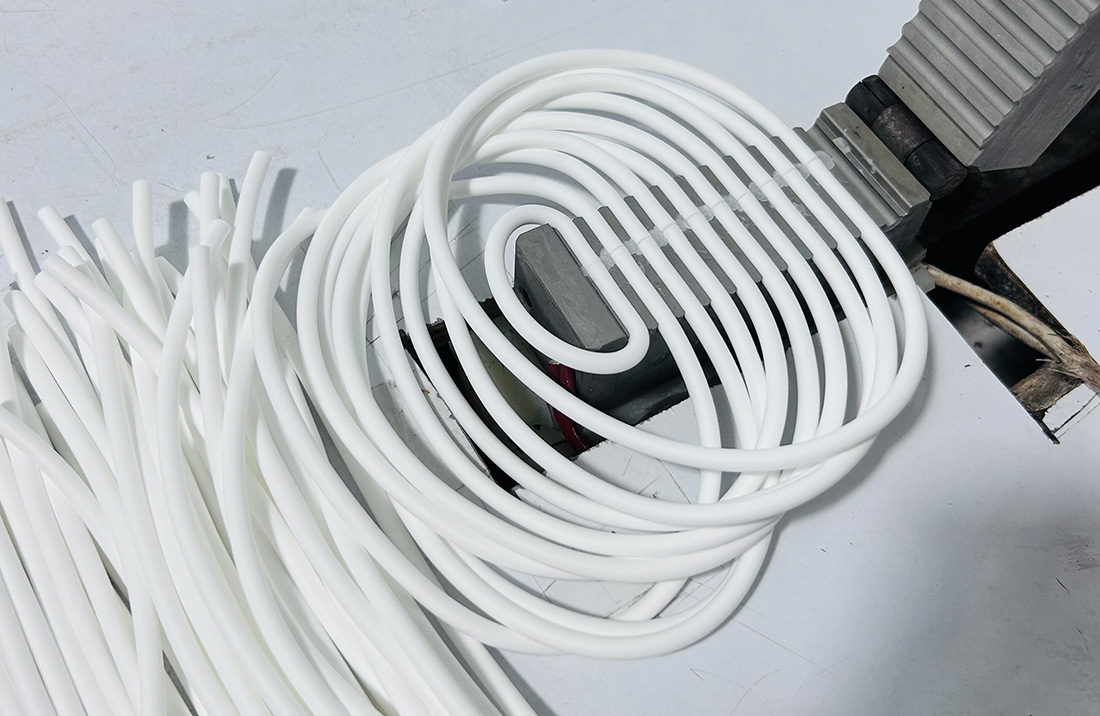
Transforming silicone foam strips into silicone foam sealing rings involves an adhesion process using fixtures and silicone adhesive. Post-cutting, the strip ends are flat and require a mold for bonding through high-temperature vulcanization. Adhesion molds must match the strip's shape—square molds for square strips and round molds for round strips. Due to the thermal bonding nature of the process, molds must withstand temperatures up to 200 degrees Celsius. Some complex strip structures may require split molds for proper adhesion.
Silicone glue is applied evenly to the strip's ends, and the strips are then placed in the heated molds using a pneumatic bonding machine. The mold's high temperature facilitates curing the silicone glue, typically taking 10 to 20 seconds to set. High-precision molds can produce multiple rings simultaneously, boosting production efficiency. Once cured, the silicone foam strip takes on a ring shape, and any excess adhesive can be trimmed away.
Step 3: Adhesion (Cold Bonding)
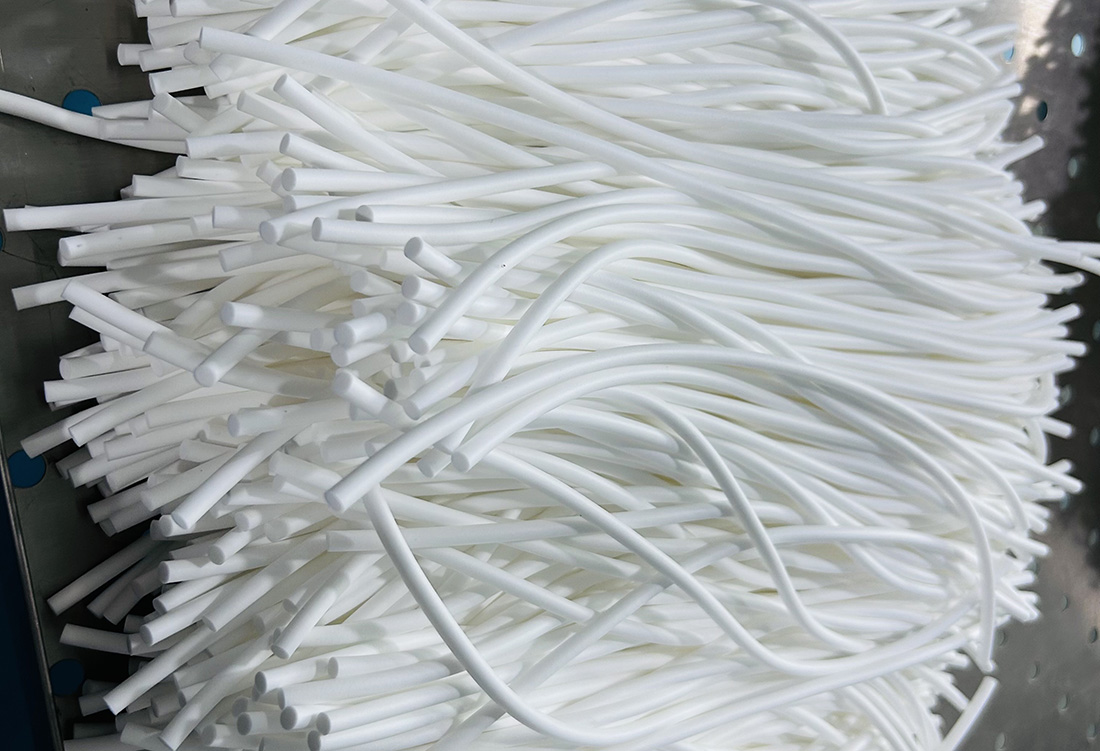
An alternative to hot bonding is cold bonding, where silicone foam strips naturally cure over time. The mold's design should still match the strip's dimensions but need not be heat-resistant. Molds should be slightly oversized to accommodate any adjustments during the curing period, as the adhesive remains in a liquid state before setting, which can cause the strip to shift.
After applying cold adhesive to the strip's ends, it should remain undisturbed in the mold. Minor adjustments can be made after 1 to 2 hours, with full curing achieved after approximately 24 hours. Once cured, the ring can be removed and trimmed, resulting in a seamless silicone foam sealing ring.
Conclusion: Hot vs. Cold Bonding
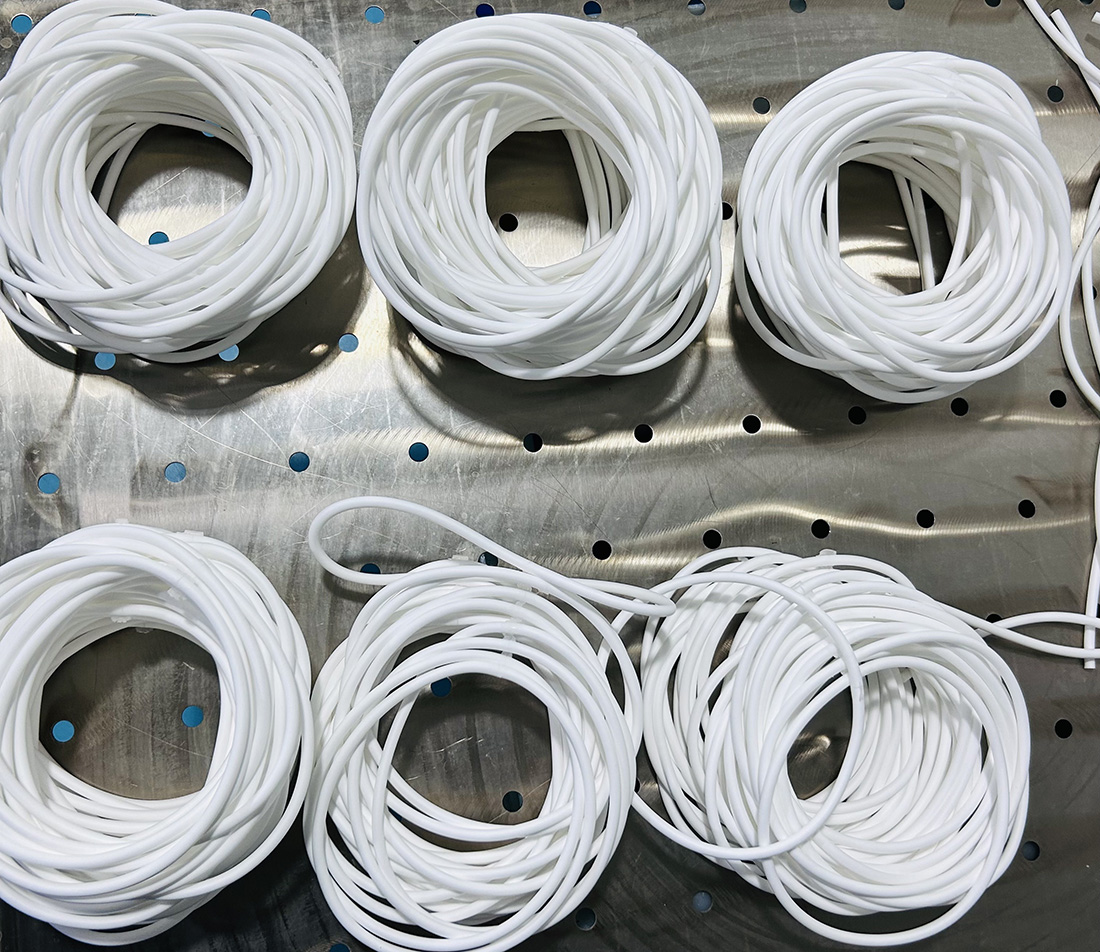
Both hot and cold bonding methods for silicone foam strips have distinct advantages. Hot bonding significantly enhances production efficiency and ensures high product quality, albeit with a less glossy finish. This method requires skilled operators and specific equipment but is the preferred choice for mass production, used by leading manufacturers, including Dongguan Yutian.
Cold bonding is more accessible, allowing for multiple adjustments and requiring only basic molds. Although this method involves a longer curing time and is less suited for large-scale production, it results in a more aesthetically pleasing product with a robust bond, ideal for high-quality, low-volume applications.
Understanding these methods allows businesses to choose the best process for their specific needs, ensuring effective and efficient production of silicone foam sealing rings.

点击右上角
分享给朋友吧







 Long by picture save/share
0
Popular
-
top Colored Silicone Tube: Production Process and How to Choose
-
top Enhancing the Lifespan of High-Temperature Silicone Tubes in...
-
top Introducing the Innovative Foam Silicone Tube: A High-Perfor...
-
The evolution and future of silicone material: a panoramic a...
-
Dongguan Yutian Silicone Rubber Technology Co., Ltd. Unveils...
-
Understanding the Causes of Bending and Clogging in Food-Gra...
-
Explore Cutting-Edge Silicone Solutions with Dongguan Yutian...
-
Dongguan Yutian Successfully Showcases Innovative Medical Si...
Latest Products






Message
Hi!If you are looking for custom-made silicone rubber products, feel free to ask me any questions.
Understanding the Correct Adhesion Process for Transforming Silicone Foam Strips into Silicone Foam Sealing Rings
Author:Dongguan Yutian Silicone Rubber Technology Co., Lt
Click:
Time:2024-11-17 22:07:15
Silicone foam strips can be expertly transformed into silicone foam sealing rings through precise cutting and adhesion processes. This transformation allows the silicone foam ring to effectively serve multiple purposes, such as sealing and waterproofing. Thanks to the inherent properties of silicone foam, including resistance to high and low temperatures, flame retardancy, and fire resistance, the sealing and waterproof capabilities form a robust barrier. Key to this transformation is the use of appropriate tools and adhesives, which are essential for achieving a seamless transition from strip to ring.
Step 1: Cutting
Silicone foam strips are produced using an extrusion process, typically resulting in long lengths packaged in rolls of 100 to 200 meters. Before cutting, it's crucial to determine the exact length needed. For instance, if sealing a product with a diameter of 200 millimeters, the required length of the silicone foam strip would be 628 millimeters. This is calculated by multiplying the diameter by π (pi) to obtain the circumference.
Once the required length is known, appropriate tools for cutting must be prepared. Unlike automated cutting machines, pneumatic cutting tools are preferred for silicone foam strips. This preference is due to the foam's low hardness and high elasticity, which can result in length shrinkage if improperly handled. Automated machines often have larger cutting errors due to these material properties. Conversely, pneumatic cutting, controlled manually, ensures accuracy since the strips are placed without tension, allowing for precise cuts without subsequent shrinkage. Therefore, pneumatic cutting devices are recommended as they offer minimal length variance, although they do require manual operation, which is slower than automated methods. However, the precision gained outweighs the speed of fully automated systems.
Step 2: Adhesion (Hot Bonding)
Transforming silicone foam strips into silicone foam sealing rings involves an adhesion process using fixtures and silicone adhesive. Post-cutting, the strip ends are flat and require a mold for bonding through high-temperature vulcanization. Adhesion molds must match the strip's shape—square molds for square strips and round molds for round strips. Due to the thermal bonding nature of the process, molds must withstand temperatures up to 200 degrees Celsius. Some complex strip structures may require split molds for proper adhesion.
Silicone glue is applied evenly to the strip's ends, and the strips are then placed in the heated molds using a pneumatic bonding machine. The mold's high temperature facilitates curing the silicone glue, typically taking 10 to 20 seconds to set. High-precision molds can produce multiple rings simultaneously, boosting production efficiency. Once cured, the silicone foam strip takes on a ring shape, and any excess adhesive can be trimmed away.
Step 3: Adhesion (Cold Bonding)
An alternative to hot bonding is cold bonding, where silicone foam strips naturally cure over time. The mold's design should still match the strip's dimensions but need not be heat-resistant. Molds should be slightly oversized to accommodate any adjustments during the curing period, as the adhesive remains in a liquid state before setting, which can cause the strip to shift.
After applying cold adhesive to the strip's ends, it should remain undisturbed in the mold. Minor adjustments can be made after 1 to 2 hours, with full curing achieved after approximately 24 hours. Once cured, the ring can be removed and trimmed, resulting in a seamless silicone foam sealing ring.
Conclusion: Hot vs. Cold Bonding
Both hot and cold bonding methods for silicone foam strips have distinct advantages. Hot bonding significantly enhances production efficiency and ensures high product quality, albeit with a less glossy finish. This method requires skilled operators and specific equipment but is the preferred choice for mass production, used by leading manufacturers, including Dongguan Yutian.
Cold bonding is more accessible, allowing for multiple adjustments and requiring only basic molds. Although this method involves a longer curing time and is less suited for large-scale production, it results in a more aesthetically pleasing product with a robust bond, ideal for high-quality, low-volume applications.
Understanding these methods allows businesses to choose the best process for their specific needs, ensuring effective and efficient production of silicone foam sealing rings.
点击右上角
分享给朋友吧
Long by picture save/share
0
Popular
Popular
Popular
Popular
-
top Colored Silicone Tube: Production Process and How to Choose
-
top Enhancing the Lifespan of High-Temperature Silicone Tubes in...
-
top Introducing the Innovative Foam Silicone Tube: A High-Perfor...
-
The evolution and future of silicone material: a panoramic a...
-
Dongguan Yutian Silicone Rubber Technology Co., Ltd. Unveils...
-
Understanding the Causes of Bending and Clogging in Food-Gra...
-
Explore Cutting-Edge Silicone Solutions with Dongguan Yutian...
-
Dongguan Yutian Successfully Showcases Innovative Medical Si...
Latest Products
Message
 Brown Di
 Brown Di