

Demand Submission
Please leave us a message and we will contact you within 24 hours
NEWS CENTER
A variety of production processes, research and development, production, sales integration
NEWS CENTER
A variety of production processes, research and development, production, sales integration
Silicone Diffuser for LED Strip: Material Engineering for Stable and Uniform Optical Performance
Time: 2025-11-24 00:33:29
Author: Dongguan Yutian Silicone Rubber Technology Co., Lt
Click:
This article examines the silicone diffuser for LED strips from an engineering perspective, focusing on optical diffusion, material durability, UV resistance, anti-yellowing stability, and flexible structural performance. It highlights silicone’s technical advantages and its suitability for long-lasting, uniform lighting applications.
Introduction
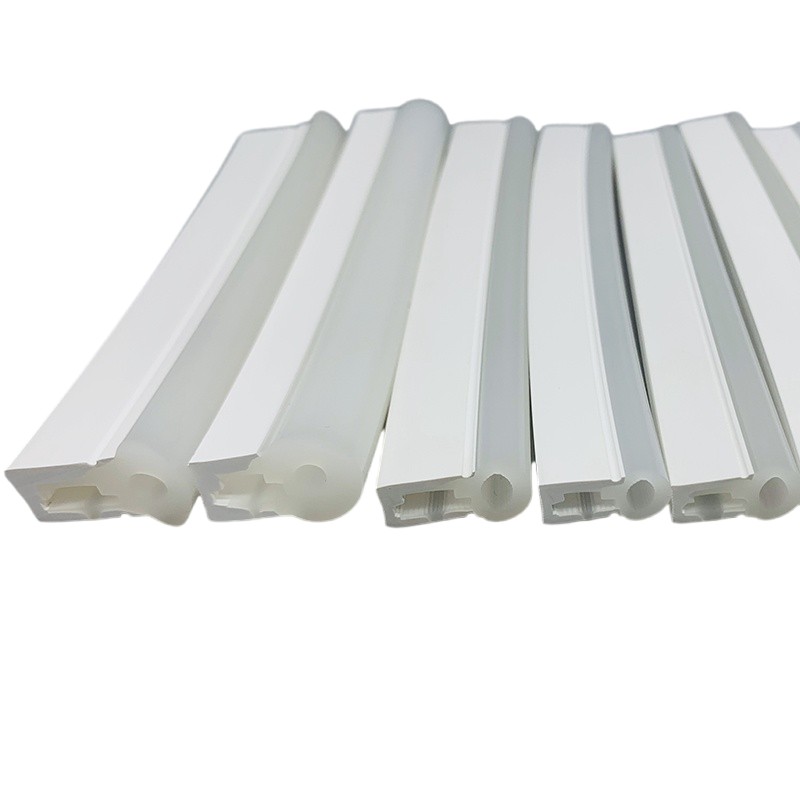
In LED lighting systems, the diffuser is more than a surface component. It plays a decisive role in optical uniformity, long-term light stability, and structural integration. A silicone diffuser for LED strip is engineered to address the limitations of traditional thermoplastic diffusers by offering superior flexibility, UV stability, and long-term anti-yellowing performance. This makes it particularly suitable for modern linear lighting designs where optical consistency and material durability are equally important.
Optimized Light Diffusion Through Material Transparency Control
The optical behavior of silicone is determined by its controlled light-transmission rate and internal scattering characteristics. Unlike rigid PC or PMMA covers, silicone allows a fine balance between translucency and diffusion, enabling effective hotspot elimination while maintaining lumen efficiency.
By adjusting the silicone compound’s refractive properties, the diffuser achieves stable scattering that blends each LED point into a continuous light line. This optical consistency is essential for applications where uniformity is critical, such as architectural lines, interior illumination, or decorative contours.
The diffuser’s ability to maintain uniform diffusion even under thermal expansion is another engineering advantage. Because silicone retains flexibility across a wide temperature range, the optical performance remains consistent without forming cracks or stress marks that affect the light path.
High Flexibility for Radius Bending and Structural Adaptation
The mechanical performance of silicone is defined by its Shore hardness, tensile strength, and elongation properties. These parameters allow the diffuser to be compressed, bent, or shaped without losing structural stability.
For LED strips that require tight bending radiuses, silicone achieves seamless curvature without optical distortion. Its elasticity prevents deformation around the light source, enabling:
- continuous light in curved profiles
- stable geometry in long-term installations
- consistent cross-section thickness for balanced diffusion
This adaptability makes silicone suitable for intricate lighting pathways that conventional diffusers cannot accommodate.
UV Resistance, Anti-Yellowing and Aging Stability
Long-term outdoor or high-illumination environments expose materials to UV radiation, heat, and oxidative stress. Silicone demonstrates superior stability due to its inorganic Si–O–Si backbone, giving it strong resistance to chain breakage and discoloration.
A high-quality silicone diffuser can maintain clarity and physical integrity for 1–3 years without significant yellowing, depending on the formulation and environmental exposure. Additional anti-UV agents further enhance resistance to photodegradation, allowing the diffuser to preserve light quality and visual appearance under demanding conditions.
This performance reliability directly impacts the overall lifespan of the lighting system, reducing maintenance needs and ensuring long-term optical stability.
Surface Treatment for Dust Resistance and Optical Cleanliness
To achieve better aesthetic and functional performance, the silicone surface can undergo specialized treatments. One common method is an anti-dust or oil-coating process that reduces static accumulation and surface adhesion.
This treatment improves:
- cleanliness in exposed installations
- long-term transparency
- ease of maintenance
- resistance to particulate buildup
By preventing surface contamination, the diffuser maintains a clearer light path, which helps preserve overall optical efficiency.
Customization for Optical, Structural, and Installation Requirements
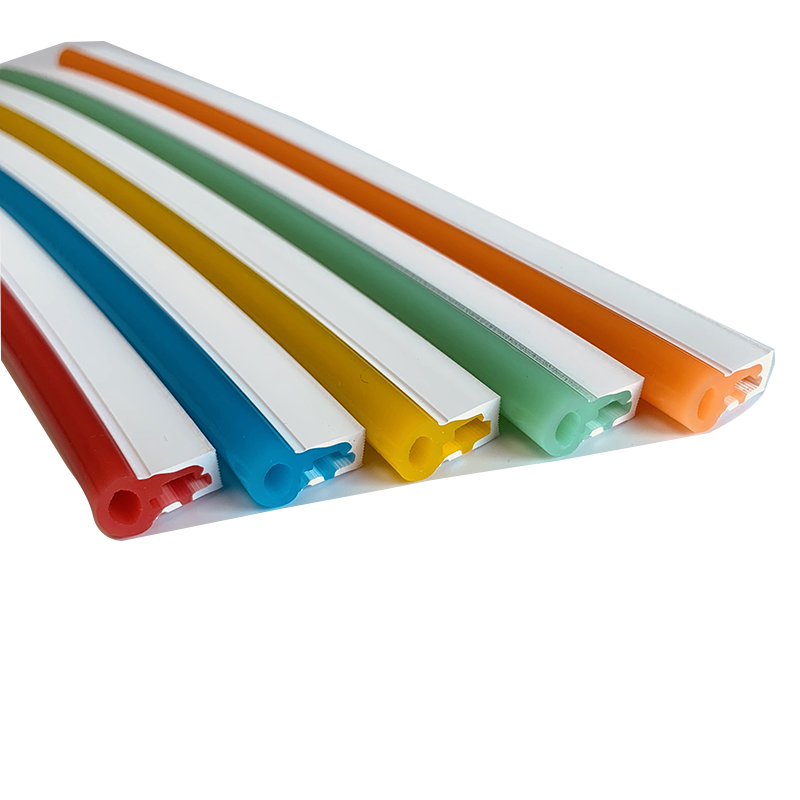
As a fully moldable and extrudable material, silicone can be customized for cross-section geometry, thickness distribution, hardness, and color. Yutian Silicone provides tailored production options to match diverse lighting designs, including:
- custom diffusion levels
- specific Shore hardness for improved fit
- customized shapes for unique LED housing structures
- anti-yellowing formulas
- UV-enhanced silicone grades
This flexibility ensures that the diffuser aligns with the technical requirements of each project, supporting better structural integration with LED strips and aluminum profiles.
Conclusion
A silicone diffuser for LED strip offers a combination of advanced optical diffusion, mechanical flexibility, and environmental durability. With optimized light-transmission properties, strong UV resistance, and the ability to maintain shape and clarity over years of use, silicone is a highly engineered solution for modern lighting systems. The material’s compatibility with custom profiles and surface treatments allows lighting designers and manufacturers to achieve stable, smooth, and long-lasting illumination.

点击右上角
分享给朋友吧







 Long by picture save/share
0
Popular
-
top Colored Silicone Tube: Production Process and How to Choose
-
top Enhancing the Lifespan of High-Temperature Silicone Tubes in...
-
top Introducing the Innovative Foam Silicone Tube: A High-Perfor...
-
The evolution and future of silicone material: a panoramic a...
-
Dongguan Yutian Silicone Rubber Technology Co., Ltd. Unveils...
-
Understanding the Causes of Bending and Clogging in Food-Gra...
-
Explore Cutting-Edge Silicone Solutions with Dongguan Yutian...
-
Dongguan Yutian Successfully Showcases Innovative Medical Si...
Latest Products





Message
Hi!If you are looking for custom-made silicone rubber products, feel free to ask me any questions.
Silicone Diffuser for LED Strip: Material Engineering for Stable and Uniform Optical Performance
Author:Dongguan Yutian Silicone Rubber Technology Co., Lt
Click:
Time:2025-11-24 00:33:29
Introduction
In LED lighting systems, the diffuser is more than a surface component. It plays a decisive role in optical uniformity, long-term light stability, and structural integration. A silicone diffuser for LED strip is engineered to address the limitations of traditional thermoplastic diffusers by offering superior flexibility, UV stability, and long-term anti-yellowing performance. This makes it particularly suitable for modern linear lighting designs where optical consistency and material durability are equally important.
Optimized Light Diffusion Through Material Transparency Control
The optical behavior of silicone is determined by its controlled light-transmission rate and internal scattering characteristics. Unlike rigid PC or PMMA covers, silicone allows a fine balance between translucency and diffusion, enabling effective hotspot elimination while maintaining lumen efficiency.
By adjusting the silicone compound’s refractive properties, the diffuser achieves stable scattering that blends each LED point into a continuous light line. This optical consistency is essential for applications where uniformity is critical, such as architectural lines, interior illumination, or decorative contours.
The diffuser’s ability to maintain uniform diffusion even under thermal expansion is another engineering advantage. Because silicone retains flexibility across a wide temperature range, the optical performance remains consistent without forming cracks or stress marks that affect the light path.
High Flexibility for Radius Bending and Structural Adaptation
The mechanical performance of silicone is defined by its Shore hardness, tensile strength, and elongation properties. These parameters allow the diffuser to be compressed, bent, or shaped without losing structural stability.
For LED strips that require tight bending radiuses, silicone achieves seamless curvature without optical distortion. Its elasticity prevents deformation around the light source, enabling:
- continuous light in curved profiles
- stable geometry in long-term installations
- consistent cross-section thickness for balanced diffusion
This adaptability makes silicone suitable for intricate lighting pathways that conventional diffusers cannot accommodate.
UV Resistance, Anti-Yellowing and Aging Stability
Long-term outdoor or high-illumination environments expose materials to UV radiation, heat, and oxidative stress. Silicone demonstrates superior stability due to its inorganic Si–O–Si backbone, giving it strong resistance to chain breakage and discoloration.
A high-quality silicone diffuser can maintain clarity and physical integrity for 1–3 years without significant yellowing, depending on the formulation and environmental exposure. Additional anti-UV agents further enhance resistance to photodegradation, allowing the diffuser to preserve light quality and visual appearance under demanding conditions.
This performance reliability directly impacts the overall lifespan of the lighting system, reducing maintenance needs and ensuring long-term optical stability.
Surface Treatment for Dust Resistance and Optical Cleanliness
To achieve better aesthetic and functional performance, the silicone surface can undergo specialized treatments. One common method is an anti-dust or oil-coating process that reduces static accumulation and surface adhesion.
This treatment improves:
- cleanliness in exposed installations
- long-term transparency
- ease of maintenance
- resistance to particulate buildup
By preventing surface contamination, the diffuser maintains a clearer light path, which helps preserve overall optical efficiency.
Customization for Optical, Structural, and Installation Requirements
As a fully moldable and extrudable material, silicone can be customized for cross-section geometry, thickness distribution, hardness, and color. Yutian Silicone provides tailored production options to match diverse lighting designs, including:
- custom diffusion levels
- specific Shore hardness for improved fit
- customized shapes for unique LED housing structures
- anti-yellowing formulas
- UV-enhanced silicone grades
This flexibility ensures that the diffuser aligns with the technical requirements of each project, supporting better structural integration with LED strips and aluminum profiles.
Conclusion
A silicone diffuser for LED strip offers a combination of advanced optical diffusion, mechanical flexibility, and environmental durability. With optimized light-transmission properties, strong UV resistance, and the ability to maintain shape and clarity over years of use, silicone is a highly engineered solution for modern lighting systems. The material’s compatibility with custom profiles and surface treatments allows lighting designers and manufacturers to achieve stable, smooth, and long-lasting illumination.
点击右上角
分享给朋友吧
Long by picture save/share
0
Popular
Popular
Popular
Popular
-
top Colored Silicone Tube: Production Process and How to Choose
-
top Enhancing the Lifespan of High-Temperature Silicone Tubes in...
-
top Introducing the Innovative Foam Silicone Tube: A High-Perfor...
-
The evolution and future of silicone material: a panoramic a...
-
Dongguan Yutian Silicone Rubber Technology Co., Ltd. Unveils...
-
Understanding the Causes of Bending and Clogging in Food-Gra...
-
Explore Cutting-Edge Silicone Solutions with Dongguan Yutian...
-
Dongguan Yutian Successfully Showcases Innovative Medical Si...
Latest Products
Message
 Brown Di
 Brown Di