

Demand Submission
Please leave us a message and we will contact you within 24 hours
NEWS CENTER
A variety of production processes, research and development, production, sales integration
NEWS CENTER
A variety of production processes, research and development, production, sales integration
Extrusion Bonding vs. Compression Molding: Which Silicone Seal Process Wins for Your Food Containers?
Time: 2026-07-20 15:48:02
Author: Dongguan Yutian Silicone Rubber Technology Co., Lt
Click:
Comparing extrusion bonding vs compression molding for silicone seals. Extrusion bonding offers zero mold fees, any size, 3-5 day samples, and clean 10kg-tensile joints. Compression molding suits complex shapes but requires costly molds and longer lead times. For food containers, extrusion bonding delivers cost-effective, FDA-certified sealing solutions.
Extrusion Bonding vs. Compression Molding: Which Silicone Seal Process Wins for Your Food Containers?
Choosing the right manufacturing process for silicone sealing rings directly impacts your cost, lead time, and product quality. Here’s an unbiased comparison to guide your decision.
When sourcing silicone seals for food containers, lunch boxes, or kitchenware, buyers often face a critical choice: extrusion bonding or compression molding? Both methods produce functional gaskets, but they differ significantly in tooling investment, size flexibility, production speed, and overall cost‑effectiveness.
This article breaks down the pros and cons of each process, helping you determine which one aligns with your project requirements—whether you need a single custom size or a diverse range of dimensions.
What Is Compression Molding?
Compression molding is the traditional method: uncured silicone compound is placed into a heated metal cavity, the mold is closed under pressure, and the material cures into the final shape. It is widely used for producing complex, one‑piece parts.
✅ Advantages
- High design freedom – intricate geometries with undercuts, ribs, and detailed features
- Excellent dimensional accuracy – tight tolerances and smooth finish
- Seamless construction – no joints, ideal for high‑pressure applications
- Stable mechanical properties – low internal stress and minimal warpage
❌ Disadvantages
- High tooling cost – each size requires a dedicated expensive mold
- Size limitation – typically limited to parts under 600 mm in length
- Long development time – mold design and fabrication take weeks to months
- Batch production – intermittent cycles, lower efficiency
- Material waste – flash (excess rubber) must be trimmed
- Poor scalability – every new dimension demands another costly mold
What Is Extrusion Bonding?
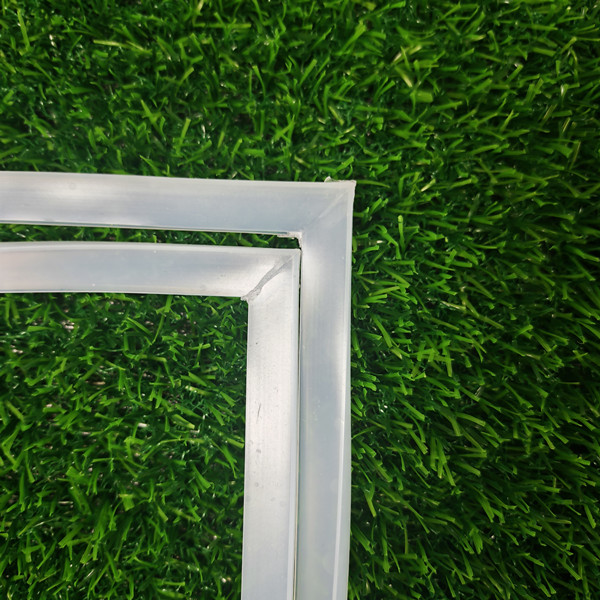
Extrusion bonding is a modern alternative: a continuous silicone profile is extruded through a die, then cut to the required length, and the two ends are precisely joined using automated bonding equipment—forming a complete ring without any mold for the ring size.
✅ Advantages
- Zero tooling cost per size – no expensive molds; only a simple extrusion die
- Unlimited dimensions – rings of any diameter or length
- Fast development – samples in 3‑5 days; mass production in 7‑10 days
- Continuous, high‑efficiency production – ideal for high volumes
- Low waste – minimal scrap, maximizing material utilization
- Perfect for multi‑size projects – one setup can produce many different dimensions
- Clean, strong joints – automated bonding achieves 10 kg tensile strength with no excess glue
⚠️ Limitations
- Bonded joint – not seamless (though highly reliable)
- Slightly lower precision – typically ±0.1 mm, still accurate for most applications
- Shape limitation – best for profiles like D‑shape, O‑ring, rectangular, bulb, P‑shape, etc. (not complex 3D geometries)
Extrusion Bonding vs. Compression Molding – Key Comparison
| Feature | Extrusion Bonding (Yutian) | Compression Molding |
|---|---|---|
| Tooling cost | ✅ None (simple die only) | ❌ High (dedicated mold) |
| Size flexibility | ✅ Any diameter/length | ❌ Limited (typically ≤600 mm) |
| Lead time (new size) | ✅ 3‑5 days for samples | ❌ Weeks to months |
| Production efficiency | ✅ Continuous, high volume | ⚠️ Batch‑based, slower |
| Dimensional tolerance | ⚠️ ±0.1 mm | ✅ ±0.3 mm (tighter possible) |
| Joint | ⚠️ Bonded (clean, 10 kg tensile) | ✅ Seamless |
| Shape complexity | ⚠️ Profiles only | ✅ Any complex shape |
| Cost for small batches | ✅ Very low | ❌ High (mold amortization) |
| Material utilization | ✅ High (low waste) | ⚠️ Flash waste |
| Temperature range | ✅ -50°C to +230°C | ✅ Similar |
| Food‑grade certification | ✅ FDA / LFGB (platinum cured) | ✅ Can be certified |
How to Choose – Three Decision Criteria
1. Do you need multiple sizes?
If your product line includes various container dimensions, extrusion bonding saves you from paying for multiple molds. Compression molding would require a separate mold for each size—costly and time‑consuming.
2. What is your order volume?
For small‑to‑medium volumes and many SKUs, extrusion bonding is more cost‑effective. For very high volumes of a single size, molding may be competitive once tooling is amortized.
3. What is your sealing requirement?
If you need a seamless seal for extreme pressures or complex internal structures, molding is the go‑to. However, for the vast majority of food container applications (lunch boxes, fresh‑keeping containers, cookware lids), a high‑quality extruded & bonded silicone sealing ring provides excellent sealing performance at a fraction of the cost.
Why Yutian – Our Extrusion Bonding Advantage
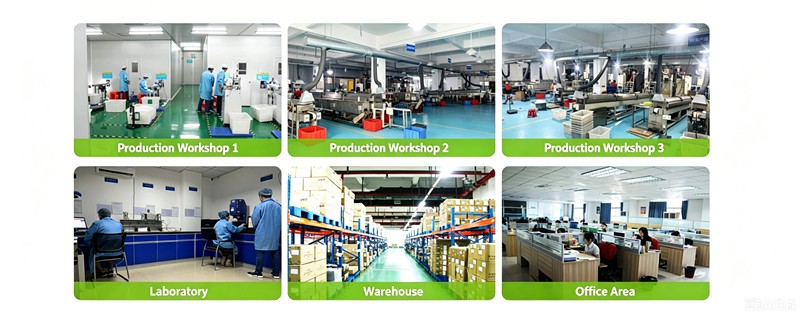
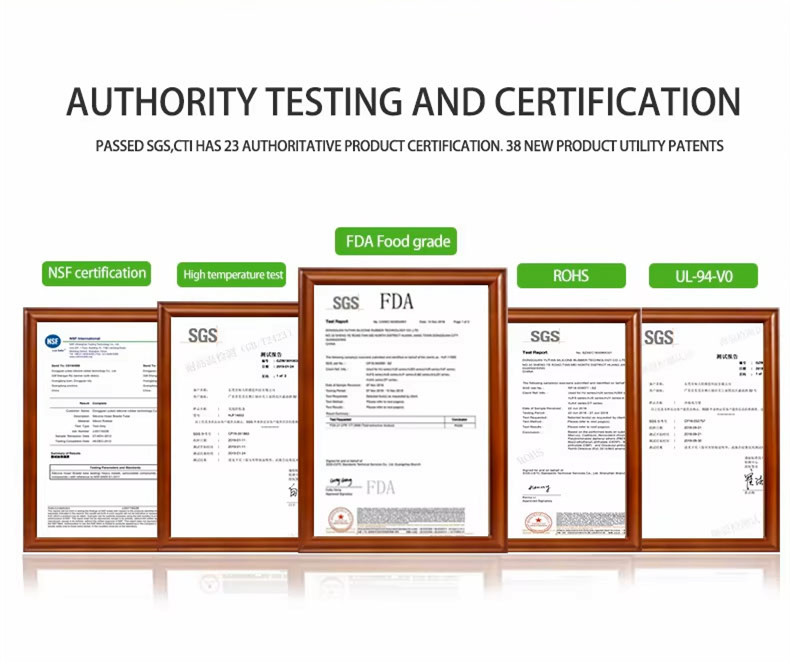
Yutian operates three integrated factories covering raw material compounding, extrusion, and automated bonding—ensuring full quality control from silicone gum to finished ring.
- Zero mold fees – We produce any custom size without tooling investment.
- Automated bonding – Our advanced equipment delivers clean, uniform joints with 10 kg tensile strength – no excess glue, no misalignment, no weak spots.
- Platinum‑cured, food‑grade silicone – FDA and LFGB certified, odorless, tasteless, and safe for direct food contact.
- Full traceability – Every batch is tested and documented.
- Fast response – Samples in 3‑5 days; mass production in 7‑10 days.
- Free samples for standard sizes available upon request.
Conclusion: Make the Smart Switch
If you are developing new food containers or want to reduce tooling costs while maintaining quality, our extruded & bonded silicone sealing rings are the answer. They offer unmatched flexibility, rapid development, and certified food safety—all without the burden of expensive molds.
Ready to discuss your project?
Send us your container dimensions or drawings – we’ll reply within 24 hours with a customized proposal.
salesmanager@yutiansilicone.com |
+86 18028921514

点击右上角
分享给朋友吧







 Long by picture save/share
0
Popular
-
top Colored Silicone Tube: Production Process and How to Choose
-
top Enhancing the Lifespan of High-Temperature Silicone Tubes in...
-
top Introducing the Innovative Foam Silicone Tube: A High-Perfor...
-
The evolution and future of silicone material: a panoramic a...
-
Dongguan Yutian Silicone Rubber Technology Co., Ltd. Unveils...
-
Understanding the Causes of Bending and Clogging in Food-Gra...
-
Explore Cutting-Edge Silicone Solutions with Dongguan Yutian...
-
Dongguan Yutian Successfully Showcases Innovative Medical Si...
Latest Products






Message
Hi!If you are looking for custom-made silicone rubber products, feel free to ask me any questions.
Extrusion Bonding vs. Compression Molding: Which Silicone Seal Process Wins for Your Food Containers?
Author:Dongguan Yutian Silicone Rubber Technology Co., Lt
Click:
Time:2026-07-20 15:48:02
Extrusion Bonding vs. Compression Molding: Which Silicone Seal Process Wins for Your Food Containers?
Choosing the right manufacturing process for silicone sealing rings directly impacts your cost, lead time, and product quality. Here’s an unbiased comparison to guide your decision.
When sourcing silicone seals for food containers, lunch boxes, or kitchenware, buyers often face a critical choice: extrusion bonding or compression molding? Both methods produce functional gaskets, but they differ significantly in tooling investment, size flexibility, production speed, and overall cost‑effectiveness.
This article breaks down the pros and cons of each process, helping you determine which one aligns with your project requirements—whether you need a single custom size or a diverse range of dimensions.
What Is Compression Molding?
Compression molding is the traditional method: uncured silicone compound is placed into a heated metal cavity, the mold is closed under pressure, and the material cures into the final shape. It is widely used for producing complex, one‑piece parts.
✅ Advantages
- High design freedom – intricate geometries with undercuts, ribs, and detailed features
- Excellent dimensional accuracy – tight tolerances and smooth finish
- Seamless construction – no joints, ideal for high‑pressure applications
- Stable mechanical properties – low internal stress and minimal warpage
❌ Disadvantages
- High tooling cost – each size requires a dedicated expensive mold
- Size limitation – typically limited to parts under 600 mm in length
- Long development time – mold design and fabrication take weeks to months
- Batch production – intermittent cycles, lower efficiency
- Material waste – flash (excess rubber) must be trimmed
- Poor scalability – every new dimension demands another costly mold
What Is Extrusion Bonding?
Extrusion bonding is a modern alternative: a continuous silicone profile is extruded through a die, then cut to the required length, and the two ends are precisely joined using automated bonding equipment—forming a complete ring without any mold for the ring size.
✅ Advantages
- Zero tooling cost per size – no expensive molds; only a simple extrusion die
- Unlimited dimensions – rings of any diameter or length
- Fast development – samples in 3‑5 days; mass production in 7‑10 days
- Continuous, high‑efficiency production – ideal for high volumes
- Low waste – minimal scrap, maximizing material utilization
- Perfect for multi‑size projects – one setup can produce many different dimensions
- Clean, strong joints – automated bonding achieves 10 kg tensile strength with no excess glue
⚠️ Limitations
- Bonded joint – not seamless (though highly reliable)
- Slightly lower precision – typically ±0.1 mm, still accurate for most applications
- Shape limitation – best for profiles like D‑shape, O‑ring, rectangular, bulb, P‑shape, etc. (not complex 3D geometries)
Extrusion Bonding vs. Compression Molding – Key Comparison
| Feature | Extrusion Bonding (Yutian) | Compression Molding |
|---|---|---|
| Tooling cost | ✅ None (simple die only) | ❌ High (dedicated mold) |
| Size flexibility | ✅ Any diameter/length | ❌ Limited (typically ≤600 mm) |
| Lead time (new size) | ✅ 3‑5 days for samples | ❌ Weeks to months |
| Production efficiency | ✅ Continuous, high volume | ⚠️ Batch‑based, slower |
| Dimensional tolerance | ⚠️ ±0.1 mm | ✅ ±0.3 mm (tighter possible) |
| Joint | ⚠️ Bonded (clean, 10 kg tensile) | ✅ Seamless |
| Shape complexity | ⚠️ Profiles only | ✅ Any complex shape |
| Cost for small batches | ✅ Very low | ❌ High (mold amortization) |
| Material utilization | ✅ High (low waste) | ⚠️ Flash waste |
| Temperature range | ✅ -50°C to +230°C | ✅ Similar |
| Food‑grade certification | ✅ FDA / LFGB (platinum cured) | ✅ Can be certified |
How to Choose – Three Decision Criteria
1. Do you need multiple sizes?
If your product line includes various container dimensions, extrusion bonding saves you from paying for multiple molds. Compression molding would require a separate mold for each size—costly and time‑consuming.
2. What is your order volume?
For small‑to‑medium volumes and many SKUs, extrusion bonding is more cost‑effective. For very high volumes of a single size, molding may be competitive once tooling is amortized.
3. What is your sealing requirement?
If you need a seamless seal for extreme pressures or complex internal structures, molding is the go‑to. However, for the vast majority of food container applications (lunch boxes, fresh‑keeping containers, cookware lids), a high‑quality extruded & bonded silicone sealing ring provides excellent sealing performance at a fraction of the cost.
Why Yutian – Our Extrusion Bonding Advantage
Yutian operates three integrated factories covering raw material compounding, extrusion, and automated bonding—ensuring full quality control from silicone gum to finished ring.
- Zero mold fees – We produce any custom size without tooling investment.
- Automated bonding – Our advanced equipment delivers clean, uniform joints with 10 kg tensile strength – no excess glue, no misalignment, no weak spots.
- Platinum‑cured, food‑grade silicone – FDA and LFGB certified, odorless, tasteless, and safe for direct food contact.
- Full traceability – Every batch is tested and documented.
- Fast response – Samples in 3‑5 days; mass production in 7‑10 days.
- Free samples for standard sizes available upon request.
Conclusion: Make the Smart Switch
If you are developing new food containers or want to reduce tooling costs while maintaining quality, our extruded & bonded silicone sealing rings are the answer. They offer unmatched flexibility, rapid development, and certified food safety—all without the burden of expensive molds.
Ready to discuss your project?
Send us your container dimensions or drawings – we’ll reply within 24 hours with a customized proposal.
salesmanager@yutiansilicone.com |
+86 18028921514
点击右上角
分享给朋友吧
Long by picture save/share
0
Popular
Popular
Popular
Popular
-
top Colored Silicone Tube: Production Process and How to Choose
-
top Enhancing the Lifespan of High-Temperature Silicone Tubes in...
-
top Introducing the Innovative Foam Silicone Tube: A High-Perfor...
-
The evolution and future of silicone material: a panoramic a...
-
Dongguan Yutian Silicone Rubber Technology Co., Ltd. Unveils...
-
Understanding the Causes of Bending and Clogging in Food-Gra...
-
Explore Cutting-Edge Silicone Solutions with Dongguan Yutian...
-
Dongguan Yutian Successfully Showcases Innovative Medical Si...
Latest Products
Message
 Brown Di
 Brown Di