

Demand Submission
Please leave us a message and we will contact you within 24 hours
NEWS CENTER
A variety of production processes, research and development, production, sales integration
NEWS CENTER
A variety of production processes, research and development, production, sales integration
Technical Requirements of Braided Silicone Hoses for Coffee Machines in the DACH Market
Time: 2026-01-12 16:25:23
Author: Dongguan Yutian Silicone Rubber Technology Co., Lt
Click:
Braided silicone hoses are critical components in coffee machines for the DACH market, where food safety, pressure resistance, and thermal stability are strictly regulated. This article explains their multilayer structure, reinforcement design, material requirements, and why consistent engineering performance is essential for long-term reliability.
Introduction
In the DACH region (Germany, Austria, and Switzerland), coffee machine components are evaluated under strict technical, hygienic, and regulatory expectations. Among these components, the braided silicone hose plays a critical role in fluid transfer systems, particularly where temperature stability, pressure resistance, and food safety must be maintained simultaneously.
Unlike general-purpose silicone tubing, braided silicone hoses used in coffee machines in the DACH market must meet a combination of mechanical, thermal, and compliance-related requirements. This article explains what defines a compliant braided silicone hose, how its structure affects performance, and why specific design choices are preferred in this region.
What Is a Braided Silicone Hose for Coffee Machines?
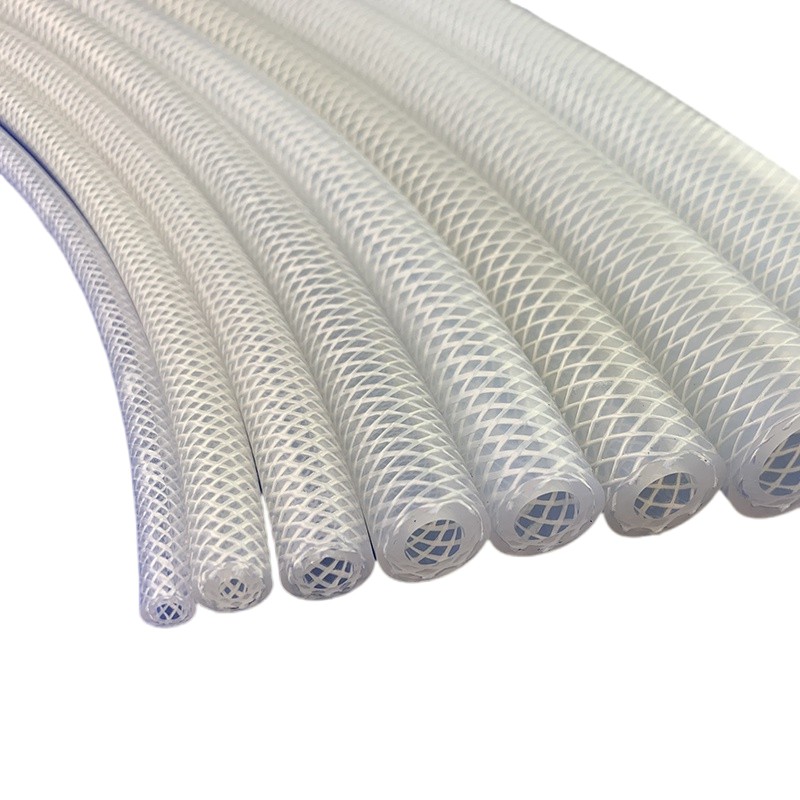
A braided silicone hose is a flexible tube composed of:
- An inner food-grade silicone layer
- A reinforcement layer, typically made of braided polyester or fiber yarn
- An outer protective silicone layer
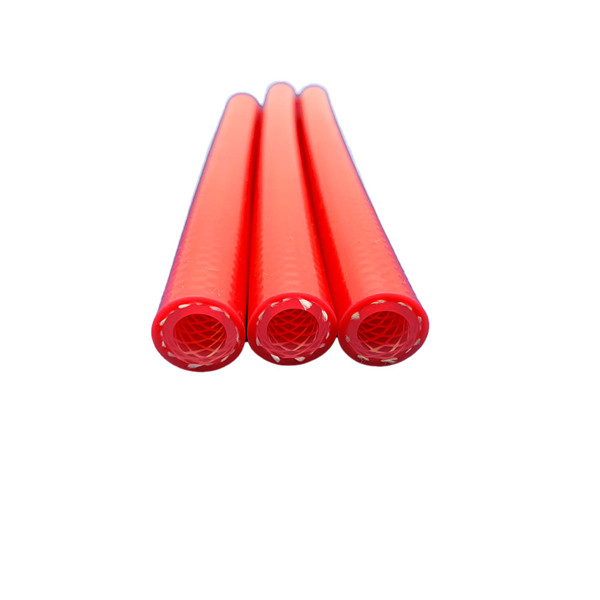
The braided reinforcement is embedded between silicone layers to improve pressure resistance and dimensional stability without sacrificing flexibility. In coffee machines, this structure allows the hose to transport hot water, steam, or beverages while maintaining consistent inner diameter and mechanical integrity.
Why Reinforcement Is Essential in Coffee Machine Systems
Coffee machines operate under repeated thermal cycles and internal pressure changes. During brewing and steaming, internal pressures may fluctuate rapidly, while temperatures can range from ambient levels to over 100 °C.
Without reinforcement, standard silicone tubing may:
- Expand under pressure
- Collapse under partial vacuum
- Deform over time due to heat exposure
The braided layer limits radial expansion and improves resistance to deformation, ensuring stable flow characteristics and longer service life.
Key Technical Requirements in the DACH Market
Food Contact and Regulatory Compliance
In the DACH region, braided silicone hoses must comply with recognized food-contact standards. The most commonly referenced include:
- LFGB (Germany)
- EU food contact regulations
- Platinum-cured silicone material requirements
These standards emphasize material purity, odor neutrality, and resistance to extractables, ensuring that the hose does not affect taste or safety.
Temperature Resistance and Thermal Stability
Braided silicone hoses used in coffee machines must withstand continuous exposure to hot water and steam. High-quality food-grade silicone maintains elasticity and mechanical strength across repeated heating and cooling cycles, reducing the risk of cracking or hardening over time.
The braided structure must also remain stable under thermal expansion, preventing separation between layers.
Pressure Resistance and Dimensional Stability
Pressure resistance is a defining requirement in DACH-market coffee machines, particularly for commercial and semi-professional systems.
The braided reinforcement:
- Limits internal diameter expansion
- Improves burst pressure performance
- Maintains consistent flow under load
Dimensional stability is especially important in compact machine designs where hose routing tolerances are minimal.
Flexibility and Installation Behavior
Despite reinforcement, braided silicone hoses must remain flexible enough for tight internal layouts. Excessive stiffness increases installation stress and may shorten service life.
Well-designed braided silicone hoses balance:
- Reinforcement density
- Silicone wall thickness
- Bending radius performance
This balance is a key selection factor for European equipment manufacturers.
Material and Manufacturing Considerations
High-quality braided silicone hoses are typically produced using platinum-cured silicone compounds. This curing system improves:
- Material purity
- Aging resistance
- Long-term elasticity
The braiding process must be precisely controlled to ensure uniform reinforcement coverage and consistent mechanical properties along the hose length.
Why the DACH Market Emphasizes Engineering Consistency
Manufacturers and equipment integrators in Germany, Austria, and Switzerland tend to prioritize predictable performance over short-term cost optimization. Components are expected to perform reliably over extended service intervals with minimal variation.
As a result, braided silicone hoses used in this market are evaluated not only by specification, but by:
- Long-term deformation behavior
- Thermal aging resistance
- Consistency between production batches
Typical Failure Modes Avoided by Proper Design
A properly designed braided silicone hose helps prevent:
- Hose swelling under pressure
- Delamination between silicone layers
- Loss of flexibility due to heat aging
- Flow instability caused by inner diameter changes
These failure modes are closely monitored in high-quality coffee machine systems.
Conclusion
In the DACH market, braided silicone hoses for coffee machines are not treated as generic consumables. They are engineered components that must meet defined requirements for food safety, pressure resistance, thermal stability, and long-term reliability.
By combining food-grade silicone materials with controlled braided reinforcement, these hoses support consistent machine performance under demanding operating conditions. Understanding these technical requirements is essential for selecting or designing braided silicone hoses suitable for European coffee machine applications.

点击右上角
分享给朋友吧







 Long by picture save/share
0
Popular
-
top Colored Silicone Tube: Production Process and How to Choose
-
top Enhancing the Lifespan of High-Temperature Silicone Tubes in...
-
top Introducing the Innovative Foam Silicone Tube: A High-Perfor...
-
The evolution and future of silicone material: a panoramic a...
-
Dongguan Yutian Silicone Rubber Technology Co., Ltd. Unveils...
-
Understanding the Causes of Bending and Clogging in Food-Gra...
-
Explore Cutting-Edge Silicone Solutions with Dongguan Yutian...
-
Dongguan Yutian Successfully Showcases Innovative Medical Si...
Latest Products





Message
Hi!If you are looking for custom-made silicone rubber products, feel free to ask me any questions.
Technical Requirements of Braided Silicone Hoses for Coffee Machines in the DACH Market
Author:Dongguan Yutian Silicone Rubber Technology Co., Lt
Click:
Time:2026-01-12 16:25:23
Introduction
In the DACH region (Germany, Austria, and Switzerland), coffee machine components are evaluated under strict technical, hygienic, and regulatory expectations. Among these components, the braided silicone hose plays a critical role in fluid transfer systems, particularly where temperature stability, pressure resistance, and food safety must be maintained simultaneously.
Unlike general-purpose silicone tubing, braided silicone hoses used in coffee machines in the DACH market must meet a combination of mechanical, thermal, and compliance-related requirements. This article explains what defines a compliant braided silicone hose, how its structure affects performance, and why specific design choices are preferred in this region.
What Is a Braided Silicone Hose for Coffee Machines?
A braided silicone hose is a flexible tube composed of:
- An inner food-grade silicone layer
- A reinforcement layer, typically made of braided polyester or fiber yarn
- An outer protective silicone layer
The braided reinforcement is embedded between silicone layers to improve pressure resistance and dimensional stability without sacrificing flexibility. In coffee machines, this structure allows the hose to transport hot water, steam, or beverages while maintaining consistent inner diameter and mechanical integrity.
Why Reinforcement Is Essential in Coffee Machine Systems
Coffee machines operate under repeated thermal cycles and internal pressure changes. During brewing and steaming, internal pressures may fluctuate rapidly, while temperatures can range from ambient levels to over 100 °C.
Without reinforcement, standard silicone tubing may:
- Expand under pressure
- Collapse under partial vacuum
- Deform over time due to heat exposure
The braided layer limits radial expansion and improves resistance to deformation, ensuring stable flow characteristics and longer service life.
Key Technical Requirements in the DACH Market
Food Contact and Regulatory Compliance
In the DACH region, braided silicone hoses must comply with recognized food-contact standards. The most commonly referenced include:
- LFGB (Germany)
- EU food contact regulations
- Platinum-cured silicone material requirements
These standards emphasize material purity, odor neutrality, and resistance to extractables, ensuring that the hose does not affect taste or safety.
Temperature Resistance and Thermal Stability
Braided silicone hoses used in coffee machines must withstand continuous exposure to hot water and steam. High-quality food-grade silicone maintains elasticity and mechanical strength across repeated heating and cooling cycles, reducing the risk of cracking or hardening over time.
The braided structure must also remain stable under thermal expansion, preventing separation between layers.
Pressure Resistance and Dimensional Stability
Pressure resistance is a defining requirement in DACH-market coffee machines, particularly for commercial and semi-professional systems.
The braided reinforcement:
- Limits internal diameter expansion
- Improves burst pressure performance
- Maintains consistent flow under load
Dimensional stability is especially important in compact machine designs where hose routing tolerances are minimal.
Flexibility and Installation Behavior
Despite reinforcement, braided silicone hoses must remain flexible enough for tight internal layouts. Excessive stiffness increases installation stress and may shorten service life.
Well-designed braided silicone hoses balance:
- Reinforcement density
- Silicone wall thickness
- Bending radius performance
This balance is a key selection factor for European equipment manufacturers.
Material and Manufacturing Considerations
High-quality braided silicone hoses are typically produced using platinum-cured silicone compounds. This curing system improves:
- Material purity
- Aging resistance
- Long-term elasticity
The braiding process must be precisely controlled to ensure uniform reinforcement coverage and consistent mechanical properties along the hose length.
Why the DACH Market Emphasizes Engineering Consistency
Manufacturers and equipment integrators in Germany, Austria, and Switzerland tend to prioritize predictable performance over short-term cost optimization. Components are expected to perform reliably over extended service intervals with minimal variation.
As a result, braided silicone hoses used in this market are evaluated not only by specification, but by:
- Long-term deformation behavior
- Thermal aging resistance
- Consistency between production batches
Typical Failure Modes Avoided by Proper Design
A properly designed braided silicone hose helps prevent:
- Hose swelling under pressure
- Delamination between silicone layers
- Loss of flexibility due to heat aging
- Flow instability caused by inner diameter changes
These failure modes are closely monitored in high-quality coffee machine systems.
Conclusion
In the DACH market, braided silicone hoses for coffee machines are not treated as generic consumables. They are engineered components that must meet defined requirements for food safety, pressure resistance, thermal stability, and long-term reliability.
By combining food-grade silicone materials with controlled braided reinforcement, these hoses support consistent machine performance under demanding operating conditions. Understanding these technical requirements is essential for selecting or designing braided silicone hoses suitable for European coffee machine applications.
点击右上角
分享给朋友吧
Long by picture save/share
0
Popular
Popular
Popular
Popular
-
top Colored Silicone Tube: Production Process and How to Choose
-
top Enhancing the Lifespan of High-Temperature Silicone Tubes in...
-
top Introducing the Innovative Foam Silicone Tube: A High-Perfor...
-
The evolution and future of silicone material: a panoramic a...
-
Dongguan Yutian Silicone Rubber Technology Co., Ltd. Unveils...
-
Understanding the Causes of Bending and Clogging in Food-Gra...
-
Explore Cutting-Edge Silicone Solutions with Dongguan Yutian...
-
Dongguan Yutian Successfully Showcases Innovative Medical Si...
Latest Products
Message
 Brown Di
 Brown Di