

Demand Submission
Please leave us a message and we will contact you within 24 hours
NEWS CENTER
A variety of production processes, research and development, production, sales integration
NEWS CENTER
A variety of production processes, research and development, production, sales integration
Foam Silicone Tube for the Middle East Market: High-Temperature Performance and Industrial Reliability
Time: 2026-01-19 01:37:44
Author: Dongguan Yutian Silicone Rubber Technology Co., Lt
Click:
Foam silicone tubes are widely used in the Middle East for industrial applications requiring heat resistance, flexibility, and durability. This article explains their properties, manufacturing principles, and use cases, helping buyers select reliable foam silicone tubing for harsh environmental conditions.
Introduction
In the Middle East, industrial components are expected to perform reliably under extreme environmental conditions. High ambient temperatures, strong UV exposure, dust, and long operating cycles place significant demands on materials used in industrial equipment.
Foam silicone tubes have become a preferred solution across the Middle East for applications requiring flexibility, thermal resistance, cushioning, and long-term durability. This article provides a comprehensive overview of foam silicone tubing, focusing on its performance advantages, manufacturing principles, and typical applications in Middle Eastern markets such as Saudi Arabia, the UAE, Qatar, and Oman.
What Is a Foam Silicone Tube?
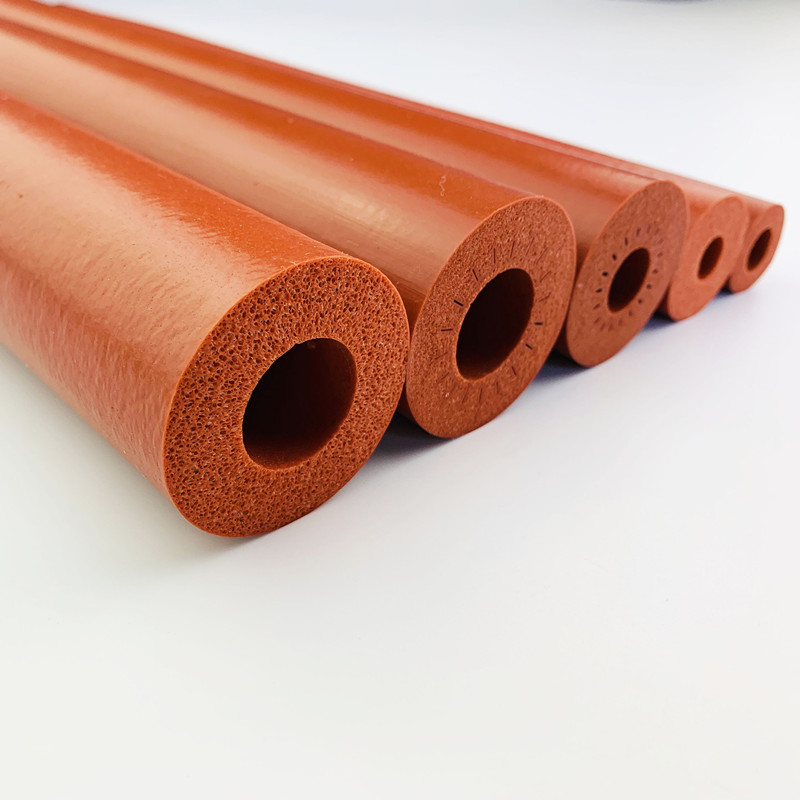
A foam silicone tube is manufactured by introducing a controlled foaming system into silicone rubber during extrusion and vulcanization. This process creates a microcellular internal structure within the tube wall, resulting in a material that is softer, lighter, and more elastic than solid silicone tubing.
Unlike solid silicone tubes, foam silicone tubes are not designed for fluid pressure transfer. Instead, they are optimized for sealing, cushioning, vibration absorption, and surface contact applications, which are common requirements in Middle Eastern industrial environments.
Why Foam Silicone Tubes Are Ideal for the Middle East
High-Temperature Resistance in Harsh Climates
One of the most important advantages of foam silicone tubing is its ability to maintain stable mechanical properties at elevated temperatures. In Middle Eastern regions where ambient temperatures can exceed 45°C, foam silicone tubes remain elastic and functional, typically operating within a temperature range of -40°C to +200°C.
This makes them suitable for outdoor installations, machinery operating in non-air-conditioned environments, and equipment exposed to direct sunlight.
UV, Ozone, and Aging Resistance
Middle Eastern environments often involve intense UV radiation and dry air. Foam silicone tubes naturally resist UV, ozone, and oxidative aging, ensuring long service life without cracking, hardening, or surface degradation.
This durability reduces maintenance frequency and replacement costs for industrial users.
Lightweight Structure and Energy Efficiency
The microcellular structure of foam silicone tubing significantly reduces material density. This lightweight characteristic is especially valuable in large-scale equipment, automation systems, and moving components, where reduced mass contributes to energy efficiency and smoother operation.
Superior Compression and Recovery Performance
Foam silicone tubes can be repeatedly compressed and released while maintaining shape and elasticity. This property is critical in applications such as rollers, soft seals, and protective sleeves, where continuous contact or vibration occurs.
Even under long-term compression, high-quality foam silicone tubing exhibits low compression set, an important requirement for industrial buyers in the Middle East.
Foam Silicone Tube Compared to Solid Silicone Tube
When engineers in the Middle East evaluate silicone tubing options, the choice often depends on function.
Foam silicone tubes are preferred when softness, cushioning, vibration damping, and surface protection are required. Their elastic structure absorbs mechanical stress and reduces noise.
Solid silicone tubes, on the other hand, are typically selected for fluid transfer or pressure-bearing applications, where internal flow and pressure resistance are essential.
Understanding this distinction helps buyers avoid over-engineering and select cost-effective solutions.
Common Applications in the Middle East Market
Foam silicone tubing is widely used across Middle Eastern industries, including:
Industrial Machinery and Automation
Used as contact rollers, protective covers, and flexible guides in manufacturing equipment operating under high temperatures.
Printing and Packaging Equipment
Applied in feeding systems and pressure rollers, where smooth surface contact and vibration reduction are critical.
Electronics and Electrical Enclosures
Used for insulation, sealing, and shock absorption, particularly in outdoor or desert installations.
HVAC and Building Systems
Installed as sealing and expansion compensation components, benefiting from heat resistance and long-term elasticity.
Oil, Gas, and Industrial Support Systems
While not used for fluid transfer, foam silicone tubing supports equipment protection, vibration isolation, and component buffering in auxiliary systems.
Manufacturing and Quality Considerations
For the Middle East market, foam silicone tubes should be produced using:
- High-purity silicone raw materials
- Precisely controlled foaming ratios
- Continuous extrusion for dimensional stability
- Tunnel or hot-air vulcanization for uniform curing
Quality-focused manufacturers perform density control, hardness testing, compression recovery evaluation, and aging resistance testing to ensure performance in harsh climates.
Compliance and Market Expectations
Although Middle Eastern markets may not enforce the same regulations as the EU, buyers increasingly expect compliance with international standards such as:
- RoHS
- REACH (for export-oriented projects)
- Optional FDA or LFGB for indirect food-related environments
Providing material safety data and compliance documentation significantly improves buyer confidence.
How to Choose a Foam Silicone Tube Supplier for the Middle East
When sourcing foam silicone tubes for Middle Eastern projects, buyers should prioritize suppliers who offer:
- Proven experience in high-temperature environments
- Consistent foam density and surface quality
- Custom diameter, hardness, and color options
- Stable long-term supply and export capability
A reliable supplier helps ensure performance stability and reduces operational risk in demanding climates.
Conclusion
Foam silicone tubes offer an ideal balance of heat resistance, flexibility, durability, and lightweight performance for the Middle East market. Their ability to withstand high temperatures, UV exposure, and long operating cycles makes them a trusted solution for industrial equipment, automation systems, and sealing applications across the region.
For companies operating in harsh environmental conditions, foam silicone tubing is a practical and cost-effective material choice.

点击右上角
分享给朋友吧







 Long by picture save/share
0
Popular
-
top Colored Silicone Tube: Production Process and How to Choose
-
top Enhancing the Lifespan of High-Temperature Silicone Tubes in...
-
top Introducing the Innovative Foam Silicone Tube: A High-Perfor...
-
The evolution and future of silicone material: a panoramic a...
-
Dongguan Yutian Silicone Rubber Technology Co., Ltd. Unveils...
-
Understanding the Causes of Bending and Clogging in Food-Gra...
-
Explore Cutting-Edge Silicone Solutions with Dongguan Yutian...
-
Dongguan Yutian Successfully Showcases Innovative Medical Si...
Latest Products





Message
Hi!If you are looking for custom-made silicone rubber products, feel free to ask me any questions.
Foam Silicone Tube for the Middle East Market: High-Temperature Performance and Industrial Reliability
Author:Dongguan Yutian Silicone Rubber Technology Co., Lt
Click:
Time:2026-01-19 01:37:44
Introduction
In the Middle East, industrial components are expected to perform reliably under extreme environmental conditions. High ambient temperatures, strong UV exposure, dust, and long operating cycles place significant demands on materials used in industrial equipment.
Foam silicone tubes have become a preferred solution across the Middle East for applications requiring flexibility, thermal resistance, cushioning, and long-term durability. This article provides a comprehensive overview of foam silicone tubing, focusing on its performance advantages, manufacturing principles, and typical applications in Middle Eastern markets such as Saudi Arabia, the UAE, Qatar, and Oman.
What Is a Foam Silicone Tube?
A foam silicone tube is manufactured by introducing a controlled foaming system into silicone rubber during extrusion and vulcanization. This process creates a microcellular internal structure within the tube wall, resulting in a material that is softer, lighter, and more elastic than solid silicone tubing.
Unlike solid silicone tubes, foam silicone tubes are not designed for fluid pressure transfer. Instead, they are optimized for sealing, cushioning, vibration absorption, and surface contact applications, which are common requirements in Middle Eastern industrial environments.
Why Foam Silicone Tubes Are Ideal for the Middle East
High-Temperature Resistance in Harsh Climates
One of the most important advantages of foam silicone tubing is its ability to maintain stable mechanical properties at elevated temperatures. In Middle Eastern regions where ambient temperatures can exceed 45°C, foam silicone tubes remain elastic and functional, typically operating within a temperature range of -40°C to +200°C.
This makes them suitable for outdoor installations, machinery operating in non-air-conditioned environments, and equipment exposed to direct sunlight.
UV, Ozone, and Aging Resistance
Middle Eastern environments often involve intense UV radiation and dry air. Foam silicone tubes naturally resist UV, ozone, and oxidative aging, ensuring long service life without cracking, hardening, or surface degradation.
This durability reduces maintenance frequency and replacement costs for industrial users.
Lightweight Structure and Energy Efficiency
The microcellular structure of foam silicone tubing significantly reduces material density. This lightweight characteristic is especially valuable in large-scale equipment, automation systems, and moving components, where reduced mass contributes to energy efficiency and smoother operation.
Superior Compression and Recovery Performance
Foam silicone tubes can be repeatedly compressed and released while maintaining shape and elasticity. This property is critical in applications such as rollers, soft seals, and protective sleeves, where continuous contact or vibration occurs.
Even under long-term compression, high-quality foam silicone tubing exhibits low compression set, an important requirement for industrial buyers in the Middle East.
Foam Silicone Tube Compared to Solid Silicone Tube
When engineers in the Middle East evaluate silicone tubing options, the choice often depends on function.
Foam silicone tubes are preferred when softness, cushioning, vibration damping, and surface protection are required. Their elastic structure absorbs mechanical stress and reduces noise.
Solid silicone tubes, on the other hand, are typically selected for fluid transfer or pressure-bearing applications, where internal flow and pressure resistance are essential.
Understanding this distinction helps buyers avoid over-engineering and select cost-effective solutions.
Common Applications in the Middle East Market
Foam silicone tubing is widely used across Middle Eastern industries, including:
Industrial Machinery and Automation
Used as contact rollers, protective covers, and flexible guides in manufacturing equipment operating under high temperatures.
Printing and Packaging Equipment
Applied in feeding systems and pressure rollers, where smooth surface contact and vibration reduction are critical.
Electronics and Electrical Enclosures
Used for insulation, sealing, and shock absorption, particularly in outdoor or desert installations.
HVAC and Building Systems
Installed as sealing and expansion compensation components, benefiting from heat resistance and long-term elasticity.
Oil, Gas, and Industrial Support Systems
While not used for fluid transfer, foam silicone tubing supports equipment protection, vibration isolation, and component buffering in auxiliary systems.
Manufacturing and Quality Considerations
For the Middle East market, foam silicone tubes should be produced using:
- High-purity silicone raw materials
- Precisely controlled foaming ratios
- Continuous extrusion for dimensional stability
- Tunnel or hot-air vulcanization for uniform curing
Quality-focused manufacturers perform density control, hardness testing, compression recovery evaluation, and aging resistance testing to ensure performance in harsh climates.
Compliance and Market Expectations
Although Middle Eastern markets may not enforce the same regulations as the EU, buyers increasingly expect compliance with international standards such as:
- RoHS
- REACH (for export-oriented projects)
- Optional FDA or LFGB for indirect food-related environments
Providing material safety data and compliance documentation significantly improves buyer confidence.
How to Choose a Foam Silicone Tube Supplier for the Middle East
When sourcing foam silicone tubes for Middle Eastern projects, buyers should prioritize suppliers who offer:
- Proven experience in high-temperature environments
- Consistent foam density and surface quality
- Custom diameter, hardness, and color options
- Stable long-term supply and export capability
A reliable supplier helps ensure performance stability and reduces operational risk in demanding climates.
Conclusion
Foam silicone tubes offer an ideal balance of heat resistance, flexibility, durability, and lightweight performance for the Middle East market. Their ability to withstand high temperatures, UV exposure, and long operating cycles makes them a trusted solution for industrial equipment, automation systems, and sealing applications across the region.
For companies operating in harsh environmental conditions, foam silicone tubing is a practical and cost-effective material choice.
点击右上角
分享给朋友吧
Long by picture save/share
0
Popular
Popular
Popular
Popular
-
top Colored Silicone Tube: Production Process and How to Choose
-
top Enhancing the Lifespan of High-Temperature Silicone Tubes in...
-
top Introducing the Innovative Foam Silicone Tube: A High-Perfor...
-
The evolution and future of silicone material: a panoramic a...
-
Dongguan Yutian Silicone Rubber Technology Co., Ltd. Unveils...
-
Understanding the Causes of Bending and Clogging in Food-Gra...
-
Explore Cutting-Edge Silicone Solutions with Dongguan Yutian...
-
Dongguan Yutian Successfully Showcases Innovative Medical Si...
Latest Products
Message
 Brown Di
 Brown Di