

Demand Submission
Please leave us a message and we will contact you within 24 hours
NEWS CENTER
A variety of production processes, research and development, production, sales integration
NEWS CENTER
A variety of production processes, research and development, production, sales integration
Technical Considerations for Silicone LED Diffusers in the DACH Market
Time: 2026-01-26 11:44:14
Author: Dongguan Yutian Silicone Rubber Technology Co., Lt
Click:
This article provides a technical overview of silicone LED diffusers designed for the DACH market. It explains material selection, UV resistance, anti-yellowing performance, optical diffusion behavior, dimensional stability, and compliance considerations, helping engineers and buyers evaluate silicone diffusers for long-term LED lighting applications.
In Germany, Austria, and Switzerland, LED lighting components are evaluated with a strong focus on material stability, long-term reliability, and engineering logic. For a silicone diffuser for LED, performance is not defined by appearance alone, but by how the material behaves after years of heat, light exposure, and mechanical stress.
This article outlines the key technical factors that DACH engineers and professional buyers typically assess when selecting a silicone LED diffuser for architectural and linear lighting systems.
Material Selection: Platinum-Cured Silicone
High-quality LED diffusers for the DACH market are commonly produced using platinum-cured silicone. Compared with peroxide-cured silicone, platinum curing avoids residual by-products that may cause odor, discoloration, or material instability over time.
This material choice supports consistent mechanical behavior, stable elasticity, and predictable aging performance, which are critical for long-term lighting installations in commercial and public environments.
UV Resistance and Anti-Yellowing Performance
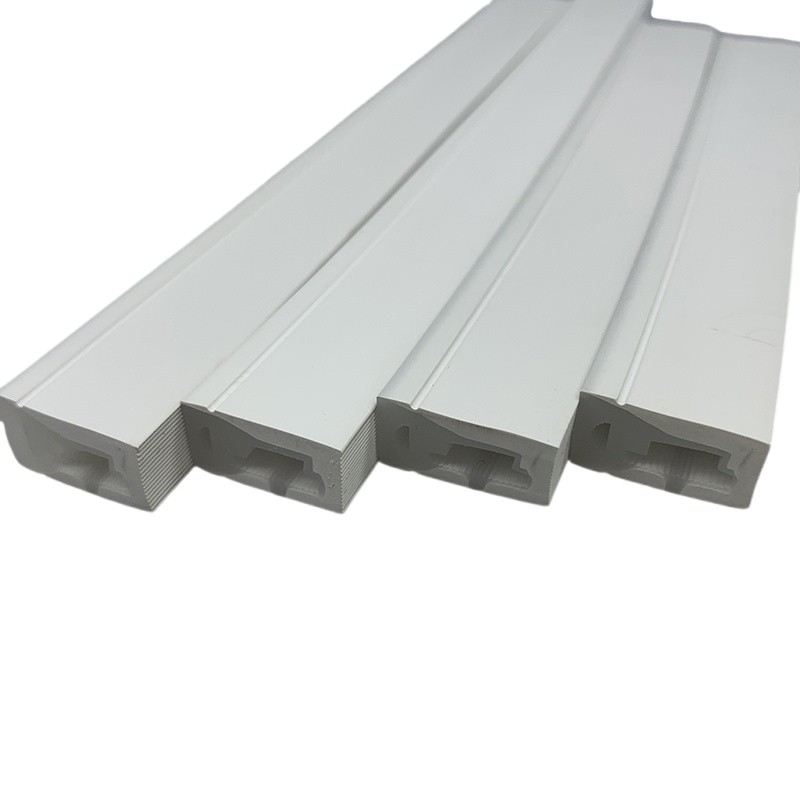
One of the main concerns for LED diffusers is long-term color stability. A professional anti-yellowing silicone diffuser relies on material-level UV stabilization rather than surface coatings.
By integrating UV-resistant additives directly into the silicone compound, the diffuser maintains optical clarity for extended periods under indoor and semi-outdoor conditions. This approach significantly reduces the yellowing risk commonly observed with PVC or low-grade silicone materials.
Optical Diffusion and Light Uniformity
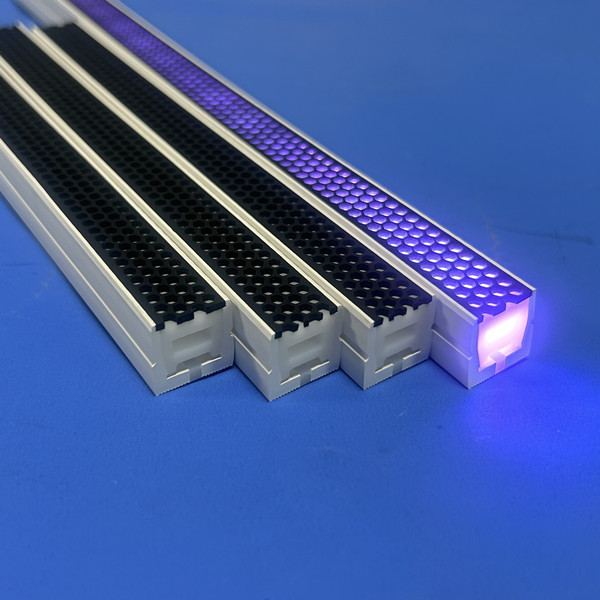
The primary optical function of a LED silicone diffuser tube is to eliminate visible LED hotspots while preserving usable luminous output.
This is achieved through a controlled balance of material haze and internal light scattering behavior. Rather than blocking light, the silicone redistributes it evenly across the diffuser surface, producing a smooth and visually comfortable lighting effect suitable for linear and architectural applications.
Thermal Stability Under Continuous Operation
Silicone LED diffusers designed for professional use typically support continuous operating temperatures up to approximately 120°C.
More importantly, the material maintains elasticity and dimensional stability during prolonged thermal exposure. This reduces risks such as hardening, cracking, or deformation, which can affect both optical performance and mechanical fit within aluminum profiles.
Dimensional Consistency and Tolerance Control
For modular LED systems, dimensional accuracy is not optional. A silicone diffuser for LED strip must fit consistently across different production batches to ensure compatibility with standardized lighting profiles.
Controlled extrusion processes and tolerance management help ensure repeatable dimensions, reducing installation variability and simplifying large-scale project deployment.
Regulatory Compliance for the DACH Market
Material compliance is considered a baseline requirement rather than a selling feature. Professional silicone LED diffusers are designed to meet RoHS and REACH regulations applicable within the European Union.
This ensures suitability for commercial, architectural, and public-space lighting projects without additional material qualification concerns.
Engineering-Level Customization
Customization for the DACH market focuses on engineering reliability rather than visual variation.
Common customization parameters include diffuser cross-section, wall thickness, diffusion level, and length control. The key requirement is that customized designs remain stable, repeatable, and supply-consistent over long production cycles.
Conclusion
A silicone LED diffuser suitable for the DACH market is defined by material integrity, optical stability, dimensional consistency, and regulatory compliance.
By focusing on platinum-cured silicone, UV-resistant formulations, controlled diffusion behavior, and precise manufacturing processes, silicone diffusers can meet the long-term expectations of German, Austrian, and Swiss lighting professionals.

点击右上角
分享给朋友吧







 Long by picture save/share
0
Popular
-
top Colored Silicone Tube: Production Process and How to Choose
-
top Enhancing the Lifespan of High-Temperature Silicone Tubes in...
-
top Introducing the Innovative Foam Silicone Tube: A High-Perfor...
-
The evolution and future of silicone material: a panoramic a...
-
Dongguan Yutian Silicone Rubber Technology Co., Ltd. Unveils...
-
Understanding the Causes of Bending and Clogging in Food-Gra...
-
Explore Cutting-Edge Silicone Solutions with Dongguan Yutian...
-
Dongguan Yutian Successfully Showcases Innovative Medical Si...
Latest Products





Message
Hi!If you are looking for custom-made silicone rubber products, feel free to ask me any questions.
Technical Considerations for Silicone LED Diffusers in the DACH Market
Author:Dongguan Yutian Silicone Rubber Technology Co., Lt
Click:
Time:2026-01-26 11:44:14
In Germany, Austria, and Switzerland, LED lighting components are evaluated with a strong focus on material stability, long-term reliability, and engineering logic. For a silicone diffuser for LED, performance is not defined by appearance alone, but by how the material behaves after years of heat, light exposure, and mechanical stress.
This article outlines the key technical factors that DACH engineers and professional buyers typically assess when selecting a silicone LED diffuser for architectural and linear lighting systems.
Material Selection: Platinum-Cured Silicone
High-quality LED diffusers for the DACH market are commonly produced using platinum-cured silicone. Compared with peroxide-cured silicone, platinum curing avoids residual by-products that may cause odor, discoloration, or material instability over time.
This material choice supports consistent mechanical behavior, stable elasticity, and predictable aging performance, which are critical for long-term lighting installations in commercial and public environments.
UV Resistance and Anti-Yellowing Performance
One of the main concerns for LED diffusers is long-term color stability. A professional anti-yellowing silicone diffuser relies on material-level UV stabilization rather than surface coatings.
By integrating UV-resistant additives directly into the silicone compound, the diffuser maintains optical clarity for extended periods under indoor and semi-outdoor conditions. This approach significantly reduces the yellowing risk commonly observed with PVC or low-grade silicone materials.
Optical Diffusion and Light Uniformity
The primary optical function of a LED silicone diffuser tube is to eliminate visible LED hotspots while preserving usable luminous output.
This is achieved through a controlled balance of material haze and internal light scattering behavior. Rather than blocking light, the silicone redistributes it evenly across the diffuser surface, producing a smooth and visually comfortable lighting effect suitable for linear and architectural applications.
Thermal Stability Under Continuous Operation
Silicone LED diffusers designed for professional use typically support continuous operating temperatures up to approximately 120°C.
More importantly, the material maintains elasticity and dimensional stability during prolonged thermal exposure. This reduces risks such as hardening, cracking, or deformation, which can affect both optical performance and mechanical fit within aluminum profiles.
Dimensional Consistency and Tolerance Control
For modular LED systems, dimensional accuracy is not optional. A silicone diffuser for LED strip must fit consistently across different production batches to ensure compatibility with standardized lighting profiles.
Controlled extrusion processes and tolerance management help ensure repeatable dimensions, reducing installation variability and simplifying large-scale project deployment.
Regulatory Compliance for the DACH Market
Material compliance is considered a baseline requirement rather than a selling feature. Professional silicone LED diffusers are designed to meet RoHS and REACH regulations applicable within the European Union.
This ensures suitability for commercial, architectural, and public-space lighting projects without additional material qualification concerns.
Engineering-Level Customization
Customization for the DACH market focuses on engineering reliability rather than visual variation.
Common customization parameters include diffuser cross-section, wall thickness, diffusion level, and length control. The key requirement is that customized designs remain stable, repeatable, and supply-consistent over long production cycles.
Conclusion
A silicone LED diffuser suitable for the DACH market is defined by material integrity, optical stability, dimensional consistency, and regulatory compliance.
By focusing on platinum-cured silicone, UV-resistant formulations, controlled diffusion behavior, and precise manufacturing processes, silicone diffusers can meet the long-term expectations of German, Austrian, and Swiss lighting professionals.
点击右上角
分享给朋友吧
Long by picture save/share
0
Popular
Popular
Popular
Popular
-
top Colored Silicone Tube: Production Process and How to Choose
-
top Enhancing the Lifespan of High-Temperature Silicone Tubes in...
-
top Introducing the Innovative Foam Silicone Tube: A High-Perfor...
-
The evolution and future of silicone material: a panoramic a...
-
Dongguan Yutian Silicone Rubber Technology Co., Ltd. Unveils...
-
Understanding the Causes of Bending and Clogging in Food-Gra...
-
Explore Cutting-Edge Silicone Solutions with Dongguan Yutian...
-
Dongguan Yutian Successfully Showcases Innovative Medical Si...
Latest Products
Message
 Brown Di
 Brown Di