

Demand Submission
Please leave us a message and we will contact you within 24 hours
NEWS CENTER
A variety of production processes, research and development, production, sales integration
NEWS CENTER
A variety of production processes, research and development, production, sales integration
Performance Requirements for Conductive Shielding Foam Silicone Sealing Strips
Time: 2024-12-19 13:42:14
Author: Dongguan Yutian Silicone Rubber Technology Co., Lt
Click:
Shielding conductive silicone foam seal as used in 5G construction of set-top box seal, communication equipment seal, etc., is also suitable for other need to seal, conductive, shielding occasions of products, is a flame retardant and fireproof silicone as the base material, after multiple tests of silicone foam seal products, and includes double 85 durability performance requirements, flame retardant, conductive, Shielding and a series of requirements
Performance Requirements for Conductive Shielding Foam Silicone Sealing Strips
Conductive shielding foam silicone sealing strips are widely used in applications such as 5G construction, set-top box sealing, and communication device sealing, as well as other products requiring sealing, conductivity, and shielding. These strips are made from fire-retardant silicone as the base material, and undergo several stages of rigorous testing to ensure their quality and performance. With specific durability, shielding, conductivity, and fire-retardant properties, each added manufacturing step introduces a new functionality to the product.
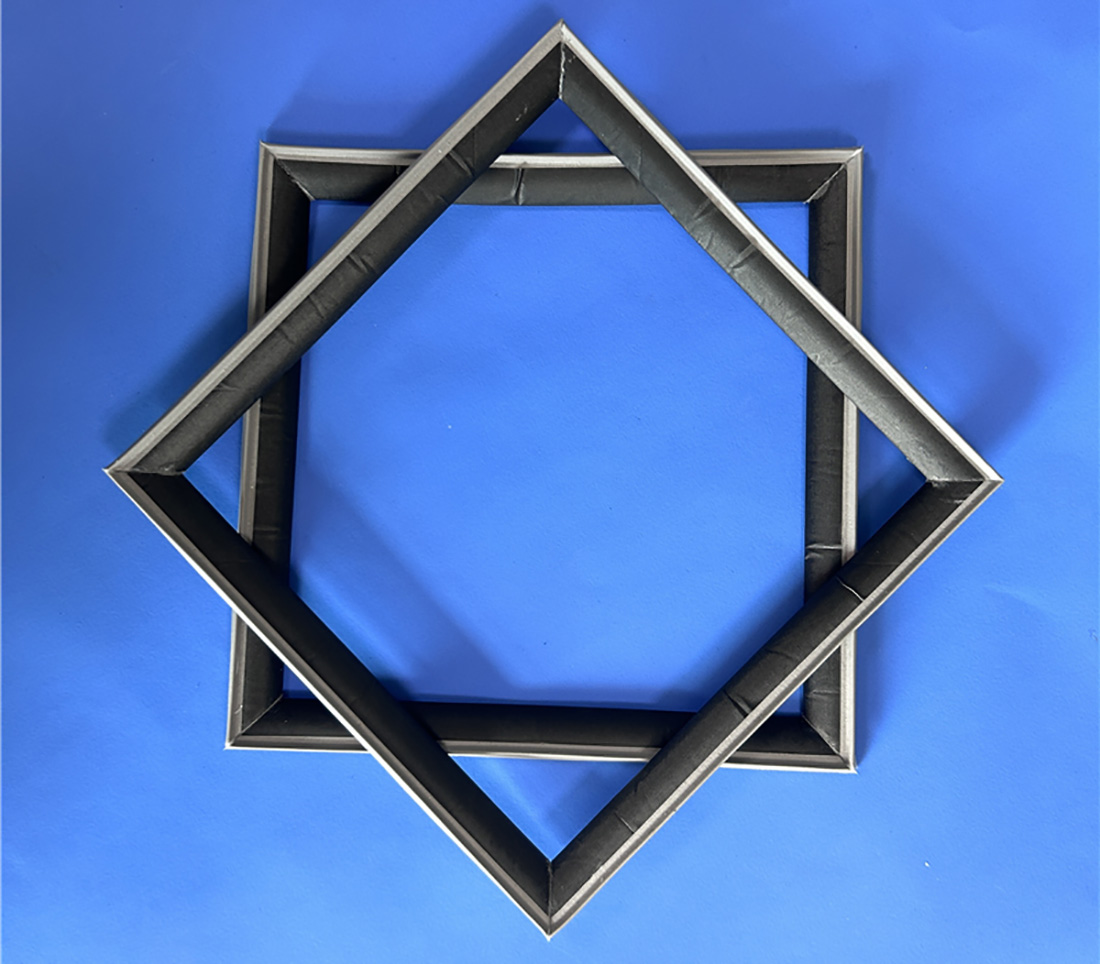
Double-85 Durability Requirements for Conductive Shielding Foam Silicone Sealing Strips
The double-85 durability test is commonly used in the silicone sealing industry and is crucial for evaluating long-term performance under high temperature and humidity. In this test, the silicone sealing strips are installed under 30% compression (compression ratio relative to the nominal height of the strip) and subjected to 85°C temperature and 85% relative humidity (RH) for 1000 hours (41 days). During this period, the sealing strip must maintain an IP67 waterproof rating and show no leakage. Additionally, the permanent deformation of the strip must not exceed 25%, and its surface resistivity must be tested. The average surface resistance should not exceed 10 ohms, with a maximum value of 20 ohms. These tests ensure the quality and durability of conductive shielding silicone foam sealing strips.
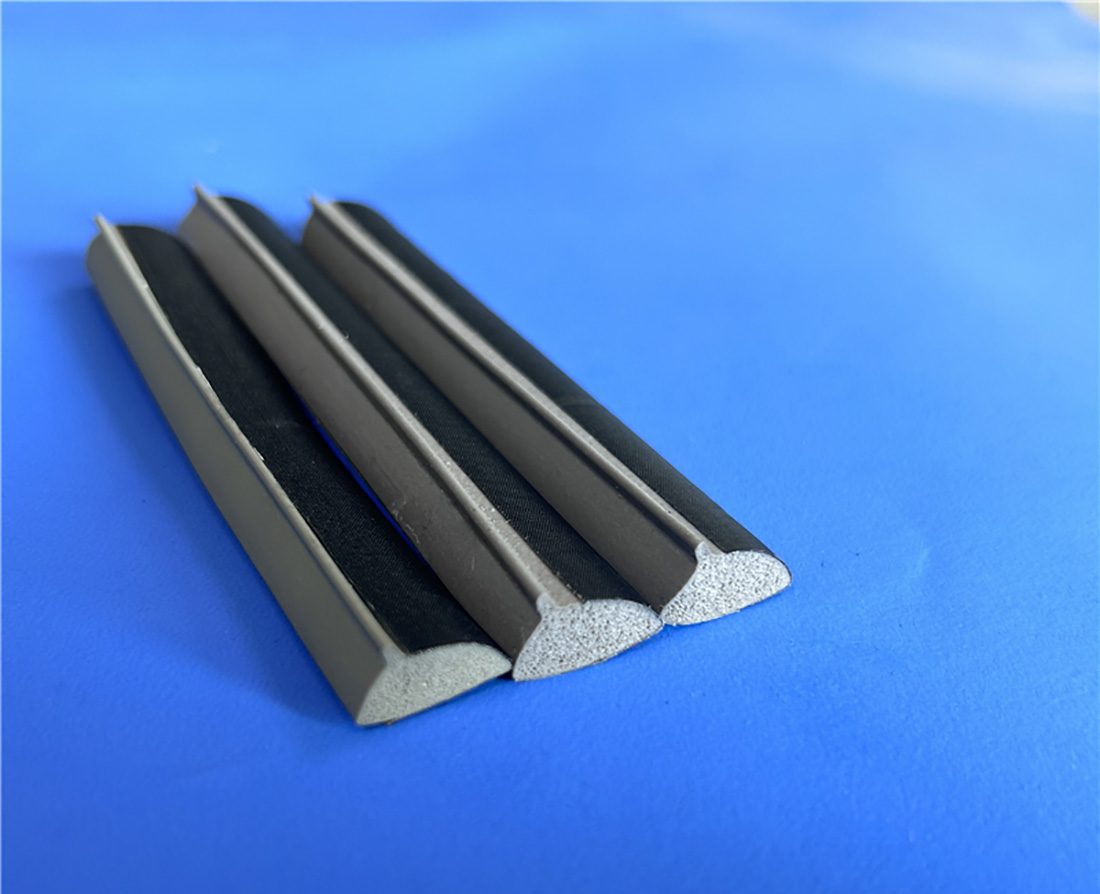
Long-Term Thermal Cycling (Rapid Temperature Change) Test
The long-term thermal cycling test evaluates the silicone foam sealing strip’s stability and reliability when subjected to rapid temperature fluctuations. In this test, the strip is subjected to frequent changes between -40°C and +200°C. Specifically, the strip is stored at -40°C for 30 minutes, followed by a rapid temperature increase at a rate of 10-15°C per minute for 10 minutes to +120°C, followed by 30 minutes of storage at +120°C, and then rapid cooling. This cycle is repeated for 17 days. The sealing strip must maintain its IP67 waterproof rating and gas-tight sealing capability under these extreme conditions. The permanent deformation of the strip due to compression must not exceed 20%.
Fire Retardant and Flame Resistance Requirements
Conductive shielding silicone foam sealing strips are made with special fire-retardant silicone materials that are foamed using platinum or peroxide vulcanization systems. These strips must self-extinguish when exposed to fire, adhering to UL94 standards. The highest flame retardant rating is UL-94-V0, which means that the material will extinguish rapidly once the flame source is removed. This is the highest standard currently available for silicone sealing strips. The fire resistance properties ensure that the sealing strip can prevent fire from spreading in critical applications.
Shielding Performance Testing
To evaluate the shielding effectiveness of conductive shielding silicone foam sealing strips, they are tested according to MIL-DTL-83528C standards. In this test, the strips are tested in the frequency range of 800 MHz to 6 GHz. The shielding effectiveness must be at least -80 dB. The test is performed by cutting the sealing strips to 100mm lengths and using specialized testing fixtures for accurate measurements. This ensures that the strips offer effective electromagnetic interference (EMI) shielding.
Conclusion: Meeting Strict Quality Standards
Conductive shielding foam silicone sealing strips must meet a variety of stringent tests and standards, including flame resistance, double-85 durability, and shielding effectiveness. After undergoing these tests, the strips are suitable for use in a wide range of applications, including 5G network construction, communication devices, and other products that require sealing, conductivity, and protection from electromagnetic interference. These comprehensive performance requirements ensure that the sealing strips deliver high-quality, reliable performance in demanding environments.
These silicone foam sealing strips meet the necessary qualifications to ensure long-term durability, electrical shielding, and resistance to extreme temperatures and fire hazards, making them essential components in the high-tech industries of today.

点击右上角
分享给朋友吧







 Long by picture save/share
0
Popular
-
top Colored Silicone Tube: Production Process and How to Choose
-
top Enhancing the Lifespan of High-Temperature Silicone Tubes in...
-
top Introducing the Innovative Foam Silicone Tube: A High-Perfor...
-
The evolution and future of silicone material: a panoramic a...
-
Dongguan Yutian Silicone Rubber Technology Co., Ltd. Unveils...
-
Understanding the Causes of Bending and Clogging in Food-Gra...
-
Explore Cutting-Edge Silicone Solutions with Dongguan Yutian...
-
Dongguan Yutian Successfully Showcases Innovative Medical Si...
Latest Products






Message
Hi!If you are looking for custom-made silicone rubber products, feel free to ask me any questions.
Performance Requirements for Conductive Shielding Foam Silicone Sealing Strips
Author:Dongguan Yutian Silicone Rubber Technology Co., Lt
Click:
Time:2024-12-19 13:42:14
Performance Requirements for Conductive Shielding Foam Silicone Sealing Strips
Conductive shielding foam silicone sealing strips are widely used in applications such as 5G construction, set-top box sealing, and communication device sealing, as well as other products requiring sealing, conductivity, and shielding. These strips are made from fire-retardant silicone as the base material, and undergo several stages of rigorous testing to ensure their quality and performance. With specific durability, shielding, conductivity, and fire-retardant properties, each added manufacturing step introduces a new functionality to the product.
Double-85 Durability Requirements for Conductive Shielding Foam Silicone Sealing Strips
The double-85 durability test is commonly used in the silicone sealing industry and is crucial for evaluating long-term performance under high temperature and humidity. In this test, the silicone sealing strips are installed under 30% compression (compression ratio relative to the nominal height of the strip) and subjected to 85°C temperature and 85% relative humidity (RH) for 1000 hours (41 days). During this period, the sealing strip must maintain an IP67 waterproof rating and show no leakage. Additionally, the permanent deformation of the strip must not exceed 25%, and its surface resistivity must be tested. The average surface resistance should not exceed 10 ohms, with a maximum value of 20 ohms. These tests ensure the quality and durability of conductive shielding silicone foam sealing strips.
Long-Term Thermal Cycling (Rapid Temperature Change) Test
The long-term thermal cycling test evaluates the silicone foam sealing strip’s stability and reliability when subjected to rapid temperature fluctuations. In this test, the strip is subjected to frequent changes between -40°C and +200°C. Specifically, the strip is stored at -40°C for 30 minutes, followed by a rapid temperature increase at a rate of 10-15°C per minute for 10 minutes to +120°C, followed by 30 minutes of storage at +120°C, and then rapid cooling. This cycle is repeated for 17 days. The sealing strip must maintain its IP67 waterproof rating and gas-tight sealing capability under these extreme conditions. The permanent deformation of the strip due to compression must not exceed 20%.
Fire Retardant and Flame Resistance Requirements
Conductive shielding silicone foam sealing strips are made with special fire-retardant silicone materials that are foamed using platinum or peroxide vulcanization systems. These strips must self-extinguish when exposed to fire, adhering to UL94 standards. The highest flame retardant rating is UL-94-V0, which means that the material will extinguish rapidly once the flame source is removed. This is the highest standard currently available for silicone sealing strips. The fire resistance properties ensure that the sealing strip can prevent fire from spreading in critical applications.
Shielding Performance Testing
To evaluate the shielding effectiveness of conductive shielding silicone foam sealing strips, they are tested according to MIL-DTL-83528C standards. In this test, the strips are tested in the frequency range of 800 MHz to 6 GHz. The shielding effectiveness must be at least -80 dB. The test is performed by cutting the sealing strips to 100mm lengths and using specialized testing fixtures for accurate measurements. This ensures that the strips offer effective electromagnetic interference (EMI) shielding.
Conclusion: Meeting Strict Quality Standards
Conductive shielding foam silicone sealing strips must meet a variety of stringent tests and standards, including flame resistance, double-85 durability, and shielding effectiveness. After undergoing these tests, the strips are suitable for use in a wide range of applications, including 5G network construction, communication devices, and other products that require sealing, conductivity, and protection from electromagnetic interference. These comprehensive performance requirements ensure that the sealing strips deliver high-quality, reliable performance in demanding environments.
These silicone foam sealing strips meet the necessary qualifications to ensure long-term durability, electrical shielding, and resistance to extreme temperatures and fire hazards, making them essential components in the high-tech industries of today.
点击右上角
分享给朋友吧
Long by picture save/share
0
Popular
Popular
Popular
Popular
-
top Colored Silicone Tube: Production Process and How to Choose
-
top Enhancing the Lifespan of High-Temperature Silicone Tubes in...
-
top Introducing the Innovative Foam Silicone Tube: A High-Perfor...
-
The evolution and future of silicone material: a panoramic a...
-
Dongguan Yutian Silicone Rubber Technology Co., Ltd. Unveils...
-
Understanding the Causes of Bending and Clogging in Food-Gra...
-
Explore Cutting-Edge Silicone Solutions with Dongguan Yutian...
-
Dongguan Yutian Successfully Showcases Innovative Medical Si...
Latest Products
Message
 Brown Di
 Brown Di